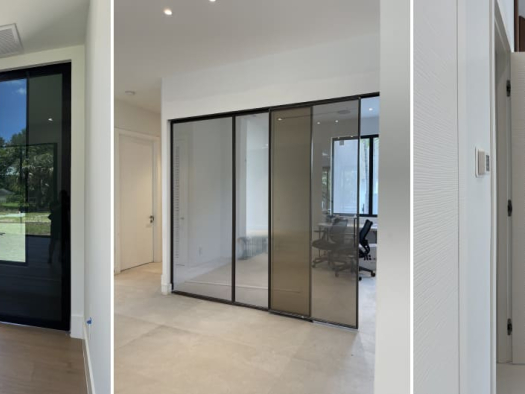

- What Durability Means in Interior Door Design
- Solid Core Doors and Long-Term Performance
- Engineered Materials and Modern Door Construction
- Door Types and Their Impact on Durability
- Frameless Doors and Structural Integrity
- Surface Finishes That Extend Door Lifespan
- Interior Doors in High-Traffic Areas
- Balancing Durability and Modern Design
- Choosing the Most Durable Interior Door for Your Home
Durability is one of the most important factors when choosing interior doors for a home. While design and style often come first, long-term performance determines how well a door holds up to daily use, climate conditions, and changing interior needs. In modern American homes, especially in states like Florida, durability is closely tied to material quality, construction methods, and door type.
A durable interior door should maintain its shape, surface integrity, and visual appeal for years—without warping, cracking, or excessive wear.
“A well-made interior door is not something you notice every day, and that is exactly the point.”
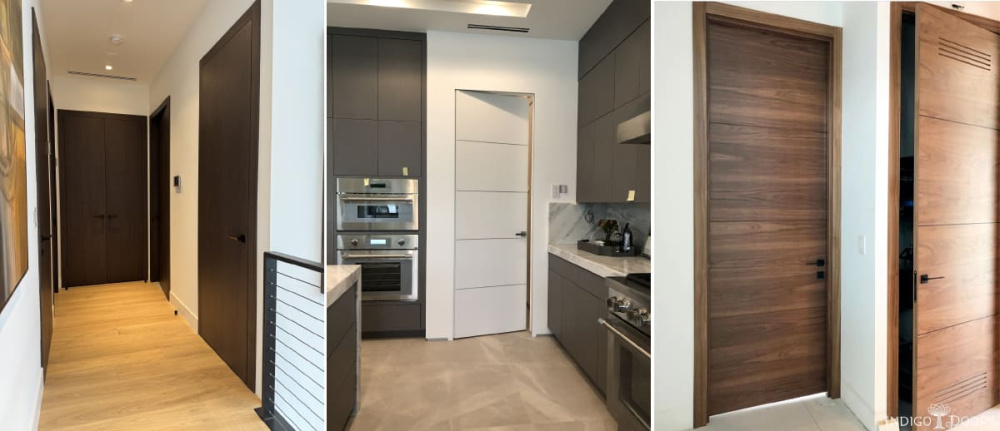
What Durability Means in Interior Door Design
Durability in interior doors is not limited to physical strength. It also includes resistance to humidity, stability over time, and the ability to maintain consistent performance in high-traffic areas.
Unlike exterior doors, interior doors are constantly opened, closed, and exposed to subtle environmental changes inside the home. Materials that cannot adapt to these conditions tend to show wear quickly.
Key durability factors include:
- Structural stability over time
- Resistance to moisture and temperature changes
- Surface wear resistance
- Long-term visual consistency
True durability is a balance between material science and thoughtful design.
Solid Core Doors and Long-Term Performance
Solid core interior doors are widely regarded as one of the most durable options available. Unlike hollow doors, they feature a dense internal core that provides strength, weight, and stability.
This construction makes solid core doors especially suitable for busy households, home offices, and shared living spaces where doors are used frequently.
Advantages of solid core interior doors include:
- Increased resistance to impact and wear
- Better sound insulation between rooms
- Reduced risk of warping over time
- A more substantial, premium feel
Durability is often felt before it is seen, and solid core doors deliver that confidence daily.
Engineered Materials and Modern Door Construction
Modern interior doors increasingly rely on engineered materials rather than traditional solid wood. These materials are designed to improve durability by reducing natural weaknesses found in raw wood.
Engineered cores and layered constructions offer enhanced stability, especially in environments where humidity levels fluctuate.
Common engineered door features include:
- Layered core structures for strength
- Stabilized surfaces to reduce expansion
- Consistent density across the panel
Engineered construction is not a compromise—it is an upgrade for modern living.
Door Types and Their Impact on Durability
The type of interior door plays a significant role in how durable it will be over time. Different door mechanisms distribute stress differently, which affects long-term performance.
Some door types naturally experience less strain on hinges and panels due to their movement mechanics.
Durability comparison by door type:
- Swing doors offer balanced, even stress distribution
- Pivot doors handle heavier panels effectively
- Pocket doors reduce surface exposure when open
- Bi-fold doors require precise engineering for longevity
Choosing the right door type ensures that material durability is supported by mechanical design.
“Durability is not just about what a door is made of, but how it moves.”
Frameless Doors and Structural Integrity
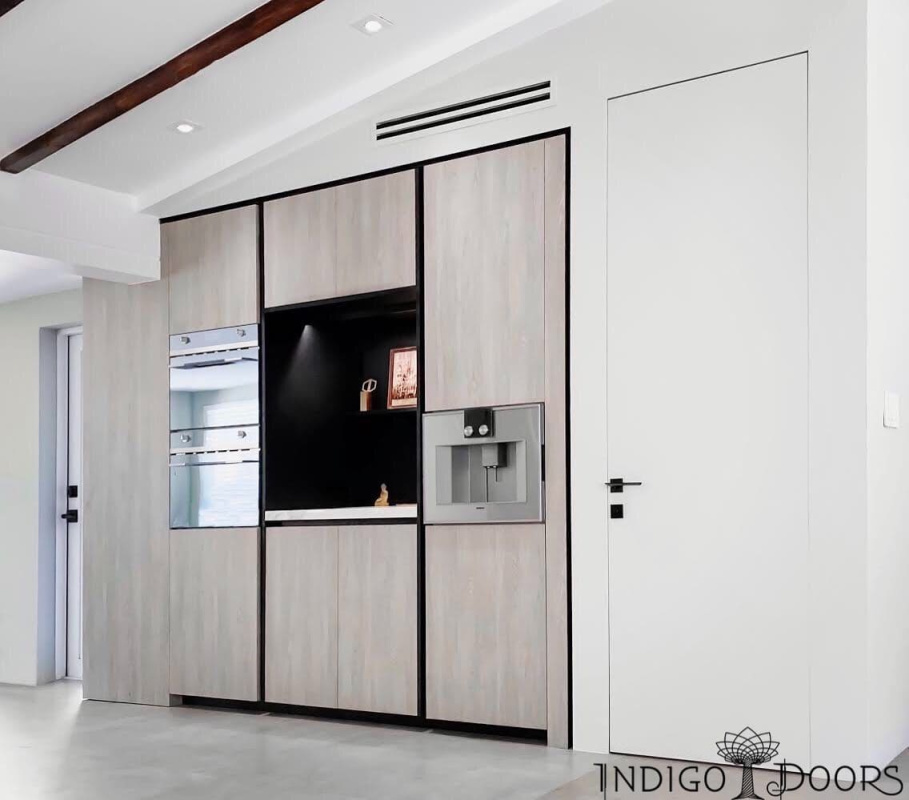
Frameless interior doors are often associated with aesthetics, but their durability is frequently underestimated. When designed correctly, frameless doors rely on precise engineering and reinforced cores to maintain alignment and performance.
Because these doors sit flush with the wall, even minor distortions would be noticeable—making structural stability a top priority in their design.
Key durability benefits of frameless doors include:
- Reinforced internal construction
- Reduced decorative elements that can wear over time
- Long-term alignment stability
Minimalism demands precision, and precision enhances durability.
Surface Finishes That Extend Door Lifespan
The finish applied to an interior door directly impacts its resistance to daily wear. High-quality finishes protect against scratches, fading, and surface damage caused by frequent handling.
In modern homes, matte finishes, high-grade paints, and engineered veneers are commonly chosen for their durability and ease of maintenance.
Durable finish characteristics include:
- Resistance to fingerprints and scuffs
- Color stability over time
- Easy surface care
A durable door surface protects both appearance and investment.
Interior Doors in High-Traffic Areas
Not all rooms place the same demands on interior doors. High-traffic areas such as hallways, living spaces, and home offices require doors that can handle repeated use without degradation.
In these spaces, durability should be prioritized over decorative complexity.
Best practices for high-traffic durability:
- Choose solid or engineered cores
- Opt for door types with stable movement
- Select finishes designed for frequent contact
“The most durable doors are the ones that quietly perform under constant use.”
Balancing Durability and Modern Design
Durability does not mean sacrificing style. Modern interior doors are designed to combine long-lasting performance with contemporary aesthetics. Clean lines, engineered materials, and thoughtful construction allow doors to remain visually relevant while standing up to everyday life.
A durable door should feel like a natural extension of the interior—not a design limitation.
When durability and design work together, the result is a door that lasts and belongs.
Choosing the Most Durable Interior Door for Your Home
There is no single answer to which interior door is the most durable, but clear patterns emerge. Solid core construction, engineered materials, stable door types, and high-quality finishes consistently deliver the best long-term results.
When evaluating durability, focus on:
- Core construction quality
- Door type and movement mechanics
- Material stability in your climate
- Finish performance over time
A durable interior door is not just built to last—it is designed to age well.