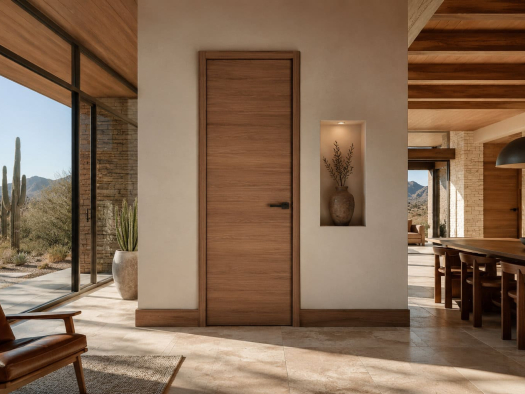

- Why Interior Doors Have a Big Impact on Room Size
- Choosing Door Types That Reduce Visual Obstruction
- Using Light-Transmitting Doors to Expand Space
- Matching Door Color to Walls for Seamless Flow
- Frameless Doors That Visually Disappear
- Rethinking Door Swing and Movement
- Keeping Door Design Simple and Minimal
- Aligning Doors with Sightlines
- Using Sliding Doors for Flexible Openness
- Making Small Rooms Feel Bigger with Smart Door Choices
Making a room look bigger doesn’t always require knocking down walls or changing the layout. In many cases, the right interior door choices can dramatically improve how spacious a room feels. Doors influence sightlines, light flow, and visual continuity—three elements that shape our perception of space.
With thoughtful interior door design, even compact rooms can feel more open, balanced, and comfortable.
“Space is as much about perception as it is about square footage.”
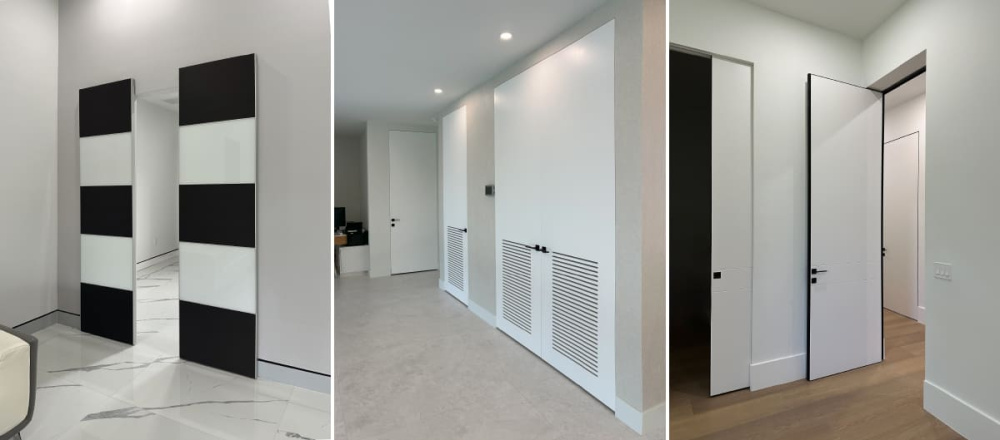
Why Interior Doors Have a Big Impact on Room Size
Interior doors often sit at key visual thresholds between spaces. When poorly chosen, they interrupt flow and visually divide rooms. When chosen correctly, they extend the sense of space beyond physical boundaries.
Doors affect how the eye moves, where light travels, and how clean or cluttered walls appear.
Key ways doors influence perceived room size include:
- Interrupting or extending sightlines
- Blocking or sharing natural light
- Adding or reducing visual weight
A room can feel larger without becoming larger.
Choosing Door Types That Reduce Visual Obstruction
One of the simplest ways to make a room look bigger is to reduce how much physical and visual space a door occupies. Door types that minimize swing clearance or visual bulk help rooms feel less crowded.
Certain door types are especially effective in compact or visually tight spaces.
Door types that support openness include:
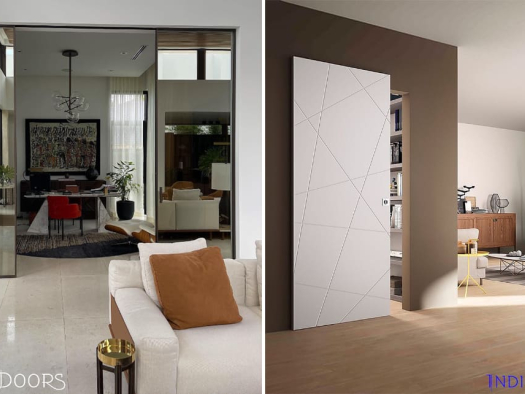
- Pocket doors that disappear into the wall
- Sliding doors that move parallel to walls
- Frameless doors that blend with surfaces
The less space a door demands, the more space the room appears to have.
Using Light-Transmitting Doors to Expand Space
Light plays a crucial role in how large a room feels. Interior doors that allow light to pass through help brighten interiors and create a sense of depth.
Glass interior doors are particularly effective when separating rooms that share natural light sources.
Benefits of light-transmitting doors include:
- Improved brightness
- Visual connection between rooms
- Increased sense of openness
Light visually stretches a space beyond its physical limits.
Matching Door Color to Walls for Seamless Flow
High-contrast doors draw attention to boundaries. In smaller rooms, this can make walls feel closer and more confined. Doors that match or closely complement wall colors reduce visual breaks and support continuity.
This approach works especially well in modern interiors with clean lines and minimal detailing.
Effective color strategies include:
- Painting doors the same color as walls
- Using soft neutrals instead of bold contrasts
- Maintaining consistent tones across adjacent spaces
“When boundaries soften, space expands.”
Frameless Doors That Visually Disappear
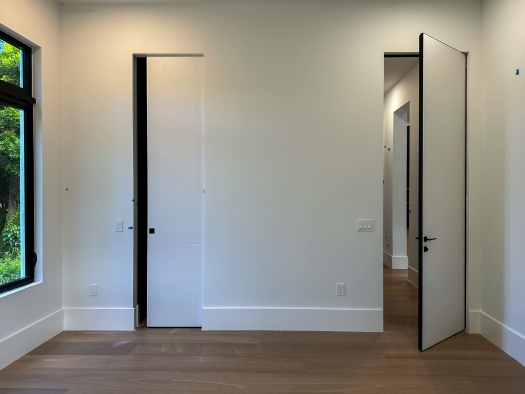
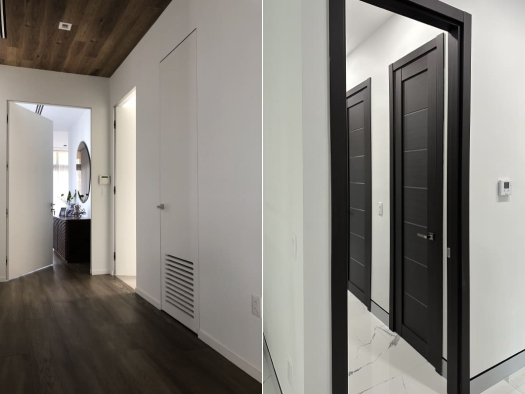
Frameless interior doors are one of the most effective tools for making rooms feel larger. By sitting flush with the wall, they reduce contrast and architectural noise.
When finished to match the wall surface, these doors nearly disappear, allowing the room itself to become the focus.
Key advantages of frameless doors:
- Minimal visual interruption
- Cleaner wall planes
- Stronger sense of continuity
Sometimes the best way to enlarge a space is to remove what visually divides it.
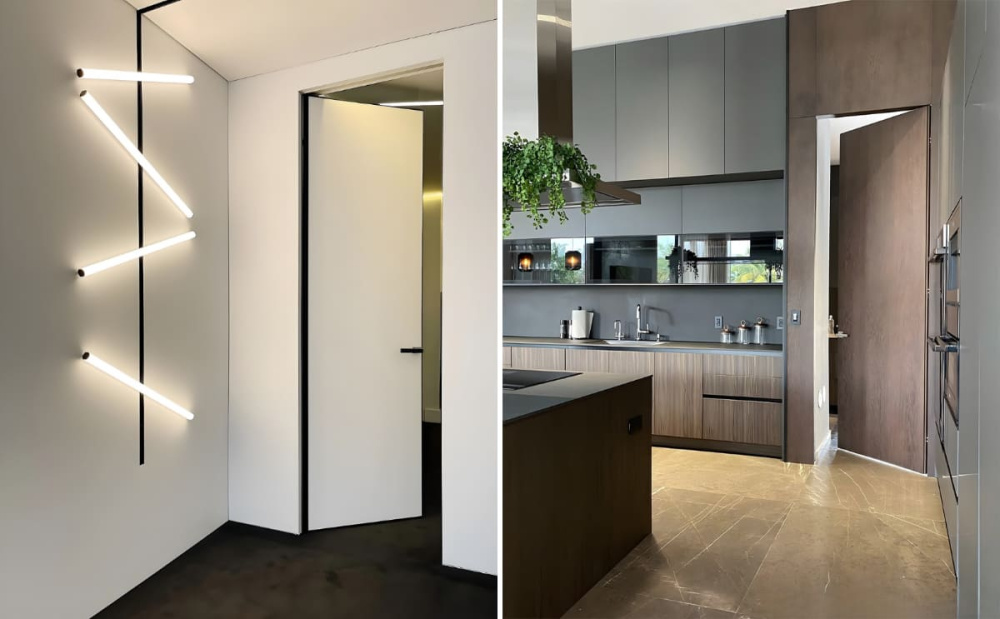
Rethinking Door Swing and Movement
Even traditional swing doors can make a room feel bigger when their movement is thoughtfully planned. A poorly oriented swing can block furniture, interrupt circulation, or crowd the visual field.
Adjusting how a door opens—without changing the door itself—can improve both function and perceived space.
Smart movement considerations include:
- Opening doors toward less visible areas
- Avoiding swings into main circulation paths
- Supporting natural room flow
Small adjustments often produce big spatial results.
Keeping Door Design Simple and Minimal
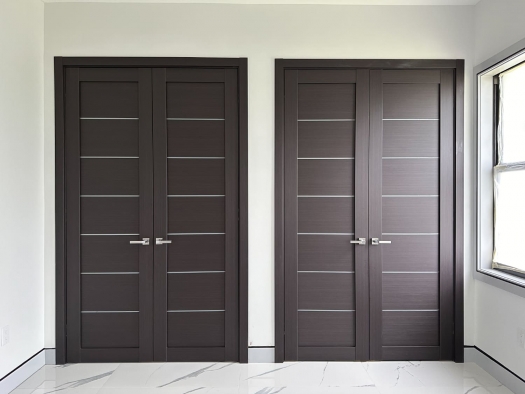
Decorative panels, heavy textures, and deep grooves add visual weight. In small rooms, this weight can overwhelm the space and make walls feel closer together.
Minimalist door designs help rooms feel lighter and more open by reducing visual complexity.
Minimalist design elements that work best:
- Flat or subtly textured panels
- Clean proportions without ornamentation
- Neutral or wall-matching finishes
“Visual simplicity creates breathing room.”
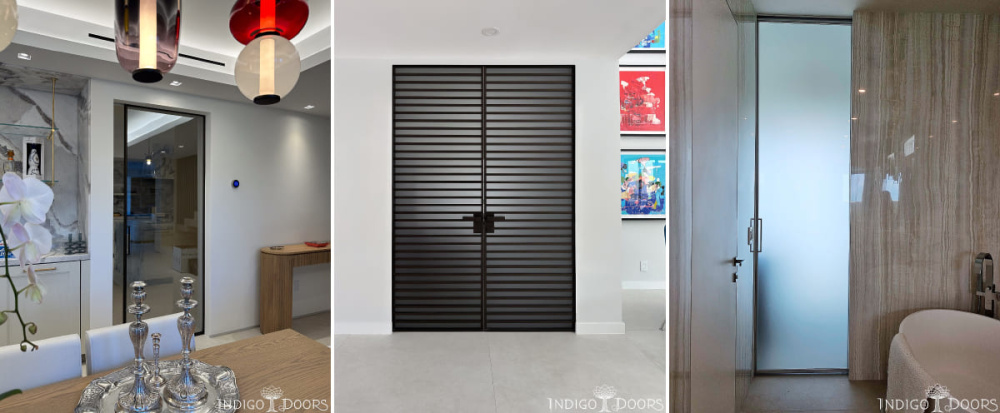
Aligning Doors with Sightlines
How doors align with hallways, windows, and adjacent rooms affects how far the eye can travel. Long, uninterrupted sightlines make rooms feel deeper and more expansive.
Doors that are thoughtfully placed help extend views rather than cut them short.
Sightline-friendly strategies include:
- Aligning doors with windows or open areas
- Avoiding unnecessary visual stops
- Supporting straight or gently flowing views
When the eye can travel, the room feels larger.
Using Sliding Doors for Flexible Openness
Sliding doors offer the ability to open or close spaces without permanently changing how large a room feels. When open, they allow spaces to visually merge. When closed, they still avoid the visual bulk of swing doors.
This flexibility is especially valuable in small homes or multifunctional rooms.
Advantages of sliding doors include:
- Space-saving movement
- Flexible room separation
- Cleaner visual transitions
Flexibility often equals spaciousness.
Making Small Rooms Feel Bigger with Smart Door Choices
Interior doors are powerful design tools. By choosing doors that respect light, flow, and visual simplicity, it is possible to dramatically change how a room is perceived.
The most effective strategies focus on:
- Reducing visual and physical obstruction
- Supporting light and sightlines
- Maintaining design consistency
When interior doors work with the space, rooms begin to feel larger, calmer, and more comfortable—no renovation required.