
- What Defines a Modern Interior Door Style
- Frameless Doors and Invisible Design Concepts
- Swing and Pivot Doors in Contemporary Spaces
- Sliding Door Solutions for Modern Homes
- Double Swing and French Door Elegance
- Bi-Fold and Roto Doors for Flexible Living
- Material and Finish Choices for Modern Door Design
- Choosing the Best Interior Door Style for Your Modern Home
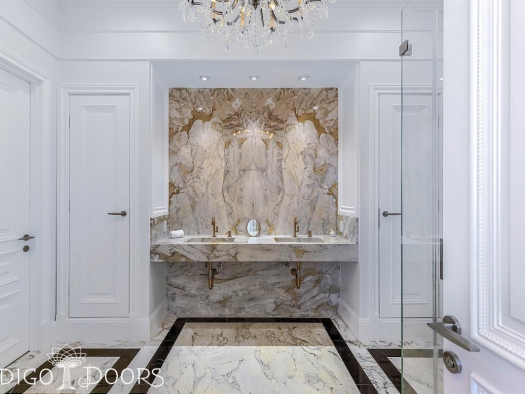
Modern homes demand more than just functionality. Interior doors today play a crucial role in shaping the visual identity of a space, influencing light flow, privacy, and the overall architectural balance. Choosing the right interior door style is not just a design decision—it’s an investment in how your home feels and functions every day.
For homeowners across the United States, especially in design-forward regions like Florida, modern interior doors have become a defining element of contemporary living spaces. The right door style can enhance openness, create seamless transitions, and reinforce a clean, minimalist aesthetic.
“Interior doors are no longer background elements. In modern homes, they are architectural features that define space and style.”
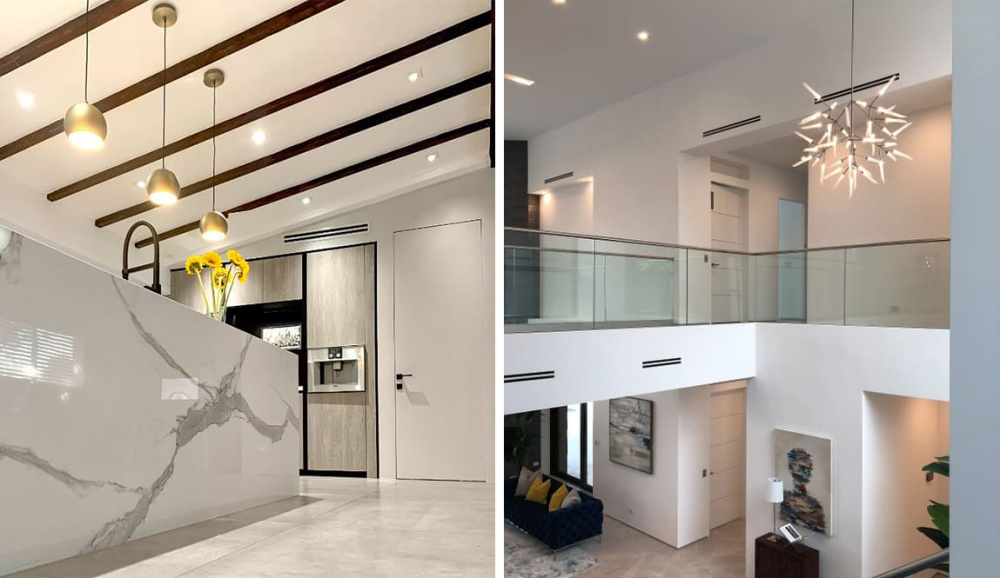
What Defines a Modern Interior Door Style
Modern interior door styles are characterized by simplicity, clean geometry, and a focus on proportion. Unlike traditional doors that rely on decorative panels and heavy ornamentation, modern doors emphasize subtlety and precision.
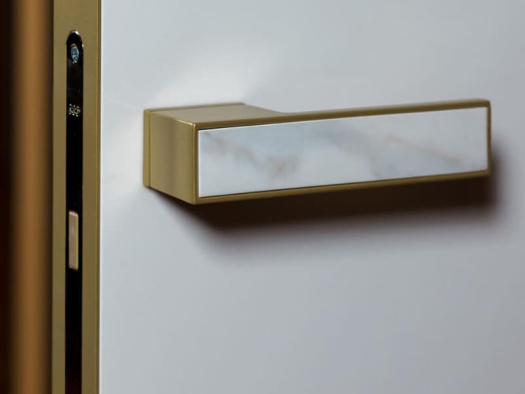
Key characteristics often include smooth surfaces, concealed hardware, minimal frames, and carefully selected finishes. These doors are designed to complement modern architecture rather than compete with it.
Common traits of modern interior doors include:
- Flat or lightly textured door panels
- Neutral or natural color palettes
- Integration with walls and surrounding elements
- Emphasis on light, space, and continuity
Modern interior doors are about what you don’t see as much as what you do see, which makes them especially appealing for contemporary homes.
Frameless Doors and Invisible Design Concepts
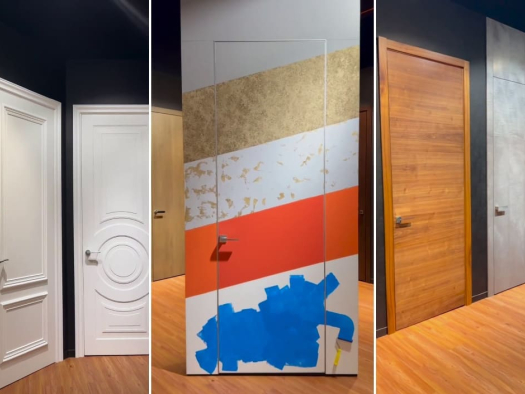
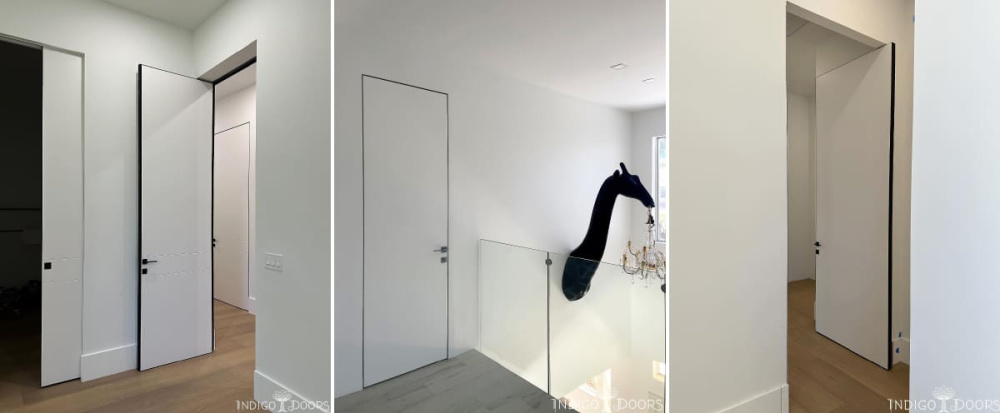
Frameless doors, often referred to as invisible doors, are among the most sought-after solutions for modern interiors. These doors are designed to sit flush with the wall, creating a seamless surface that blends architecture and function.
This style is ideal for homeowners who want visual continuity and a minimalist aesthetic. Frameless doors work exceptionally well in open-plan layouts, luxury apartments, and custom-built modern homes.
Benefits of frameless interior doors include:
- Visual expansion of space
- Minimalist and high-end appearance
- Compatibility with modern wall finishes
- Enhanced architectural symmetry
When walls and doors become one visual plane, the interior feels calmer, cleaner, and more intentional.
Swing and Pivot Doors in Contemporary Spaces
Swing doors remain a timeless solution, even in modern homes. Their versatility allows them to adapt to various design directions, from understated minimalism to bold modern statements.
Pivot doors, however, take modern design a step further. Mounted on a pivot system rather than traditional hinges, these doors rotate smoothly and create a striking architectural effect.
Key differences between swing and pivot doors:
- Swing doors emphasize familiarity and practicality
- Pivot doors highlight design innovation and openness
- Pivot systems allow for wider, heavier door panels
- Both styles can be adapted to modern interiors with the right finishes
Pivot doors are often chosen not just for function, but for the statement they make within the space.
Sliding Door Solutions for Modern Homes
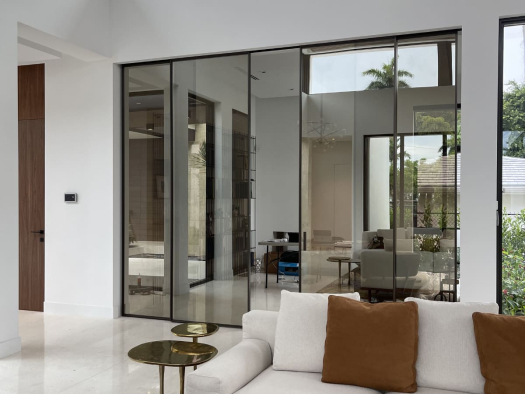
Sliding door styles are a natural fit for modern interiors, especially where space efficiency and clean lines are priorities. Pocket doors, barn doors, and bypass doors all offer different advantages depending on layout and design goals.
Pocket doors disappear into the wall, making them ideal for compact spaces or minimalist interiors. Barn-style doors add character while maintaining a modern edge when executed with refined materials and hardware.
Popular sliding door options for modern homes include:
- Pocket doors for seamless transitions
- Barn doors with modern finishes
- Bypass doors for wide openings and closets
“A well-designed sliding door doesn’t just save space—it enhances flow and visual rhythm.”
Double Swing and French Door Elegance
Double swing doors, often called French doors, are no longer limited to classic interiors. In modern homes, they are reimagined with glass panels, slim frames, and contemporary finishes.
These doors are particularly effective for connecting living areas, home offices, or dining spaces while preserving openness and light transmission.
Modern double swing doors work best when:
- Natural light is a priority
- Spaces need visual separation without isolation
- Symmetry plays a role in the interior design
Used thoughtfully, French-style doors can feel both modern and timeless at the same time.
Bi-Fold and Roto Doors for Flexible Living
Bi-fold and roto doors are excellent solutions for homeowners seeking adaptability. Bi-fold doors allow wide openings and are often used to connect indoor spaces dynamically.
Roto doors, which open in both directions while rotating on a central axis, offer a unique combination of innovation and convenience. They are particularly suitable for modern interiors where flexibility and design originality matter.
Advantages of these door types include:
- Efficient use of space
- Unique movement mechanics
- Compatibility with modern layouts
- Enhanced user experience
Innovative door systems often become conversation pieces while serving everyday needs effortlessly.
Material and Finish Choices for Modern Door Design
Material selection is just as important as door type when designing a modern interior. Wood veneers, engineered panels, glass inserts, and matte finishes dominate contemporary trends.
Neutral tones like white, gray, and natural wood remain popular, while bold contrasts such as black doors in white interiors are gaining traction. Texture and finish play a critical role in how a door interacts with light and space.
Key material considerations include:
- Durability and long-term performance
- Compatibility with interior color schemes
- Ease of maintenance
- Overall architectural harmony
“The right finish can elevate a door from a functional element to a design highlight.”
Choosing the Best Interior Door Style for Your Modern Home
There is no single “best” interior door style for all modern homes. The ideal choice depends on layout, design intent, and personal preferences. Frameless doors suit minimalist interiors, pivot doors create architectural impact, and sliding doors enhance flexibility.
When selecting modern interior doors, focus on:
- Overall home architecture
- Desired level of visual minimalism
- Space constraints and flow
- Long-term design relevance
A well-chosen interior door doesn’t just divide rooms—it connects design, function, and lifestyle.