
- Why door selection matters more in New York
- Best modern door styles for New York apartments
- Best modern door styles for New York townhouses
- Apartment rules and code considerations before replacing doors
- Historic districts and townhouse renovation limits
- Comparing door styles for apartments and townhouses
- How to choose the right interior doors in New York
- Materials and finishes that work best in NYC interiors
- Pocket, sliding and glass doors for compact plans
- Color and hardware choices for a modern New York look
- Common mistakes to avoid
- Expert recommendation for apartments
- Expert recommendation for townhouses and brownstones
- Final thoughts on modern interior doors in New York
Choosing modern interior doors in New York is not the same as choosing doors for a large suburban house. New York homes are shaped by compact plans, strict building rules, older structures, historic details, shared walls, limited natural light and the need to make every square foot work harder. A door in this context is not just a closing panel. It affects circulation, privacy, light flow, sound control and the overall architectural rhythm of the home.
This is especially true in apartments, where many owners deal with co-op or condo rules before even starting a renovation. The New York City Department of Buildings notes that interior renovation work may include new or relocated partitions and doors, which means door changes can become part of a broader compliance and approval conversation depending on the scope. In co-ops and condos, alteration agreements often define submission requirements, working hours, insurance rules and building procedures before construction begins.
New York townhouses bring a different challenge. A townhouse is generally an attached urban residence, a rowhouse is part of a continuous row, and a brownstone is defined by its brown sandstone facade, although these categories often overlap in the city. In these homes, the best modern door choice usually respects historic scale while introducing cleaner lines, better hardware and a more contemporary relationship between rooms.
My expert view is simple: the best modern interior doors in New York are the ones that solve a real spatial problem while improving the architectural language of the home. A beautiful door that blocks light in a narrow apartment hallway is not a successful choice. A trendy glass door that ruins the quiet dignity of a brownstone parlor level is not successful either. In New York, style has to be precise.
Why door selection matters more in New York
New York housing is dense, layered and highly varied. The city’s own housing research infrastructure treats the New York City Housing and Vacancy Survey as a citywide survey representing the entire housing stock and population, which reflects just how diverse the residential environment is. A pre-war Manhattan co-op, a new Brooklyn condo, a Queens apartment, a Park Slope brownstone and an Upper West Side townhouse may all need different interior door solutions.
In apartments, the main problem is usually compression. Bedrooms are smaller, hallways are tighter, closets are more valuable and every swing path matters. A standard hinged door can work perfectly in a bedroom, but it can also make a small bath, laundry closet or home office feel awkward. That is why pocket doors, sliding systems and slim-profile doors have become so relevant in city renovations.
In townhouses, the problem is usually balance. Many owners want cleaner interiors, but the architecture often has inherited proportions, original trim, tall openings, plaster details, stair halls and parlor-level transitions. The wrong minimalist slab can look thin and generic against rich historic millwork. The right modern door can quietly update the home without erasing its identity.
In New York, the strongest door choice is rarely the loudest one. It is the option that makes the apartment feel larger, the townhouse feel more coherent and the daily movement through the home feel easier.
That is why modern doors should be selected as part of the interior architecture, not as an afterthought. They should relate to wall thickness, trim profile, ceiling height, flooring, hardware finish, light direction and the purpose of each room.
Best modern door styles for New York apartments
For apartments, modern interior doors should be efficient, quiet and visually light. This does not always mean plain white slabs. It means choosing a door that supports the scale of the unit and does not create unnecessary visual clutter. In a small apartment, too many decorative panels, heavy casings or mismatched door colors can make the plan feel busier than it is.
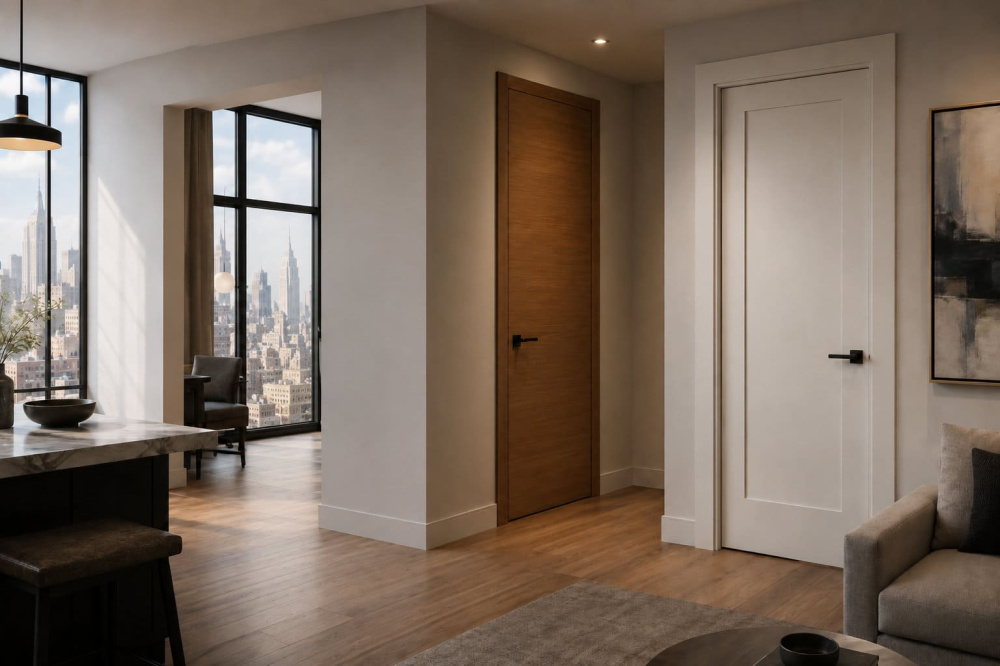
The most practical styles for New York apartments are:
-
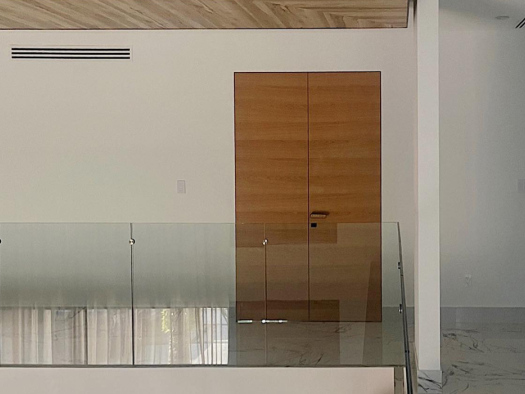
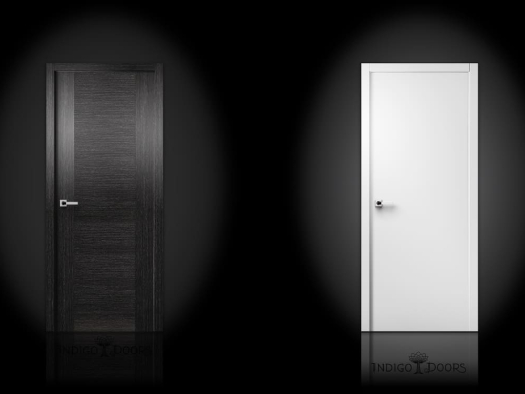
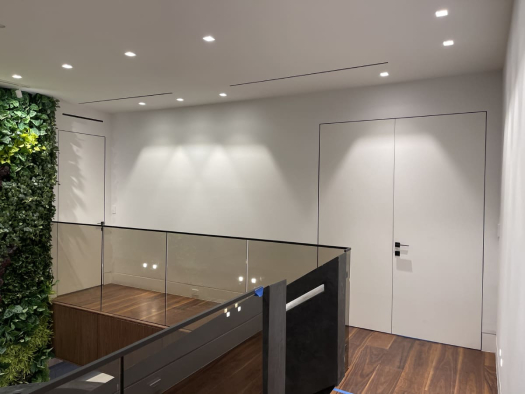
Flush doors with concealed or minimal hardware. These are ideal for modern condos, small bedrooms, hallways and minimalist interiors. They create a clean wall plane and help tight spaces feel calmer.
-
Pocket doors. These are highly useful for bathrooms, closets, laundry areas, compact offices and secondary rooms where a swing door wastes valuable clearance. Pocket doors are also receiving renewed attention because better hardware has made them smoother, quieter and more reliable.
-
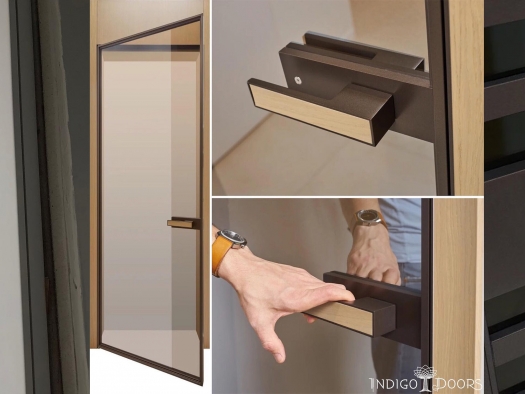
Frosted glass doors. These work well where borrowed light matters, especially between a bedroom and dressing area, home office and living room, or hallway and den. They soften privacy without fully blocking daylight.
-
Fluted or reeded glass doors. These feel more architectural than plain frosted glass. They obscure views, add texture and are especially useful in apartments that need light but cannot sacrifice privacy.
-
Slim Shaker doors. These offer a bridge between classic and modern interiors. They are cleaner than traditional panel doors but warmer than completely flat slabs.
-
Painted statement doors. Houzz has reported a wider move toward individuality through painted doors, jewel tones, wallpaper and expressive details, which makes painted doors a viable option for apartments that need personality without major construction.
My preferred apartment formula is simple: use flush or slim-profile solid doors for bedrooms, frosted or fluted glass where light matters, and pocket systems only where the space savings are meaningful. Installing a pocket door just because it is fashionable can be a mistake if the wall contains wiring, plumbing or structural complications.
Best modern door styles for New York townhouses
Townhouses, brownstones and rowhouses allow more architectural expression than most apartments, but they also demand more discipline. A modern door in a townhouse should not look like it was imported from a generic new-build condo without regard for the home’s proportions. The best styles are contemporary, but they still acknowledge verticality, material depth and room sequence.
Slim Shaker doors are often the safest modern choice for townhouses. They feel current, but they do not fight existing trim or traditional room layouts. In a brownstone with original casing, a slim Shaker profile can modernize the door while keeping enough shadow line to feel appropriate. In a fully renovated townhouse, the same style can be scaled taller and finished in warm white, soft taupe, muted green, charcoal or natural veneer.
Glass French-style doors can also work beautifully between parlor-level rooms, libraries, dining rooms and home offices. The key is to avoid overly decorative muntins if the goal is modern. A narrow metal profile, simplified wood frame or reeded glass insert gives the room definition while maintaining light flow. This is especially valuable in townhouses where the center of the plan may be darker than the front and rear rooms.
Pocket doors deserve special attention in townhouses because they have historic precedent. Many older rowhouses and brownstones used large pocket doors between formal rooms, and modern hardware now makes the concept easier to reinterpret. A contemporary pocket door between a kitchen and dining room can preserve openness most of the time while allowing separation during cooking, calls or entertaining.
Apartment rules and code considerations before replacing doors
A major mistake in New York is treating door replacement as a purely decorative upgrade. Interior room doors may be simple, but apartment entry doors, public hallway doors and doors affected by board rules are different. The New York City Department of Housing Preservation and Development warns that doors that stay open can allow fire and smoke to spread to hallways and other apartments, and HPD inspectors look for self-closing function on apartment doors and public-area doors during inspections.
This matters because homeowners sometimes confuse interior room doors with apartment entrance doors. A bedroom door can be selected for design, privacy and acoustics. An apartment entry door must be evaluated through safety, code, building policy and hardware requirements. If a project touches a corridor-facing door, fire-rated assembly or self-closing function, it should be handled with qualified professionals and building approval.
Co-op and condo renovation rules can also influence even interior changes. Fontan Architecture describes alteration agreements as formal contracts governing renovation scope, approval procedures, working hours, insurance and coordination in multi-family buildings. In practical terms, this means a door project that involves frame removal, wall changes, new openings, acoustic underlayment coordination or contractor access can become more than a simple product order.
The safest planning assumption in a New York apartment is this: changing the look of a door may be simple, but changing the opening, frame, swing, wall or rated assembly may trigger approvals.
Before ordering doors, owners should confirm whether they are replacing slabs only, replacing slabs and frames, altering openings, changing swing direction, installing pocket-door framing, or touching any door connected to a public hallway. These distinctions affect cost, timeline and feasibility.
Historic districts and townhouse renovation limits
Townhouse owners need to think about preservation, especially in historic districts. The New York City Landmarks Preservation Commission states that most exterior changes to front and rear facades in historic districts require LPC review, and LPC approval for interior work is required when the work needs a Department of Buildings permit, affects the exterior, or involves a designated interior landmark. That does not mean every interior door change is a landmark issue, but it does mean the renovation scope should be reviewed early.
For interior doors, the preservation question is usually design-sensitive rather than purely regulatory. If a townhouse still has original trim, transoms, pocket-door openings, baseboards or plaster profiles, removing all of that for flush frameless doors can reduce architectural value. In a fully gutted townhouse, modern systems may be more appropriate, but in a preserved brownstone, selective modernization usually gives a better result.
A good approach is to separate the house into architectural zones. The parlor level can keep more refined doors, glass transitions or restored pocket-door language. Private bedroom floors can use simpler solid-core doors with cleaner profiles. Garden levels, mudrooms, laundry rooms and secondary spaces can be more functional and contemporary.
This layered strategy avoids the common problem of making an old house feel either frozen in time or stripped of character. New York townhouse design works best when old and new are in conversation, not in competition.
Comparing door styles for apartments and townhouses
The table below gives a practical overview of how the main modern door styles perform in New York homes. The point is not to choose one style for every room. The point is to match each door type to the job it performs.
| Door style | Best for apartments | Best for townhouses | Main advantage | Main caution |
|---|---|---|---|---|
| Flush solid door | Bedrooms, hallways, closets, minimalist condos | Private floors, secondary rooms, modern additions | Clean look and visual calm | Can feel too plain beside ornate trim |
| Slim Shaker door | Pre-war apartments, transitional interiors | Brownstones, rowhouses, renovated classic interiors | Modern but not sterile | Panel proportions must match ceiling height |
| Pocket door | Bathrooms, offices, laundry closets, tight rooms | Parlor transitions, kitchens, libraries, flexible rooms | Saves swing clearance | Requires wall depth and careful installation |
| Frosted glass door | Offices, dressing areas, hallways needing light | Secondary rooms and interior corridors | Adds light while preserving privacy | Not ideal where sound privacy is the priority |
| Fluted glass door | Compact offices, den areas, stylish partitions | Dining rooms, studies, parlor-level transitions | Texture, privacy and light | Must be used carefully to avoid trend fatigue |
| Frameless or concealed door | Luxury condos, minimalist renovations | Fully modernized townhouse zones | Seamless architectural effect | Less compatible with historic casing |
| Painted statement door | Small apartments needing character | Powder rooms, libraries, children’s rooms, creative spaces | Big impact without major layout work | Strong colors need a cohesive palette |
In apartments, the highest-value upgrades are usually flush solid-core bedroom doors, pocket doors in cramped rooms and glass doors where borrowed light improves the plan. In townhouses, the highest-value upgrades are often slim Shaker doors, restored or reinterpreted pocket doors and glass transitions that keep long floor-through spaces bright.
How to choose the right interior doors in New York
A good door schedule should start with function, not product photos. Every room needs a different balance of privacy, light, sound control and circulation. A bedroom door has to feel solid and quiet. A home office door has to support concentration. A closet door should not steal movement from the room. A parlor door should help the architecture feel intentional.
Use this decision process before choosing a style:
-
Identify the role of each door. Decide whether the door is for privacy, acoustic control, light sharing, storage access, visual separation or architectural emphasis.
-
Measure the swing conflict. Check whether the current door interferes with furniture, bathroom fixtures, closet access or hallway movement.
-
Evaluate light conditions. If the room borrows daylight from another space, consider frosted, fluted or clear glass depending on privacy needs.
-
Review wall conditions. Pocket doors and concealed frames require more planning than standard hinged doors because the wall cavity matters.
-
Match the architectural language. A modern condo can accept flush doors easily, while a brownstone may need slimmer panel profiles or richer materials.
-
Confirm approvals and technical requirements. In apartments, check building rules. In townhouses, confirm whether the scope touches DOB or LPC considerations.
This process prevents expensive mismatches. It also helps homeowners avoid choosing one attractive door style and forcing it into every room. A New York home usually needs a coordinated door family, not a single identical solution everywhere.
Materials and finishes that work best in NYC interiors
Solid-core construction is usually worth the upgrade in New York. Hollow-core doors can feel light, transmit more sound and reduce the sense of quality in a renovated apartment. In a city where bedrooms often sit close to living areas, kitchens, elevators, hallways or neighboring units, acoustic comfort matters. A solid-core flush or panel door gives a quieter and more substantial feel.
Natural wood veneer is a strong option for modern townhouses and higher-end apartments. Walnut, white oak and light ash can add warmth without relying on heavy ornament. In a townhouse, wood veneer can connect beautifully with stair treads, flooring or built-ins. In a modern apartment, it can soften white walls and stone surfaces.
Painted finishes remain practical and flexible. Soft white, warm gray, taupe and greige are safe choices for resale-conscious interiors. Charcoal, deep green, muted blue and oxblood can work as statement finishes if the rest of the palette supports them. Houzz has noted that homeowners and pros are moving toward more individualized interiors, including painted doors and bolder design choices.
Glass should be selected by privacy level. Clear glass works for public rooms and visual connection. Frosted glass is better for offices, dressing areas and bathrooms where allowed by layout. Fluted glass is the most design-forward option because it filters the view while adding texture. The challenge is restraint. One fluted glass moment can elevate a home. Too many can make the design feel overly trend-driven.
Pocket, sliding and glass doors for compact plans
Pocket doors are especially relevant in New York because they solve a real urban problem. A standard hinged door needs swing clearance. In a small bathroom, a narrow hallway, a laundry closet or a compact office, that clearance may be more valuable than the door itself. Modern pocket hardware, soft-close systems and better tracks have made the category more reliable than older versions. The renewed interest in pocket doors is also connected to their ability to save space, improve accessibility and create flexible separation.
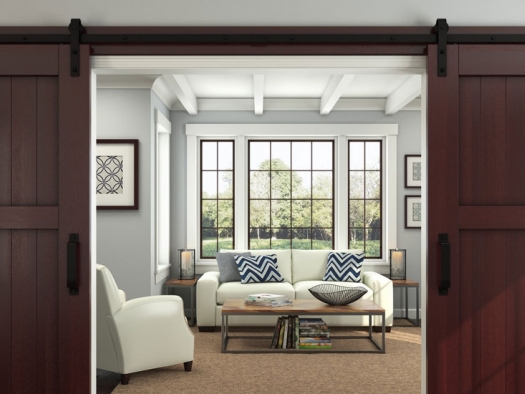
Sliding barn-style doors are less convincing for most New York interiors. They can look casual, block wall space, provide weaker acoustic privacy and feel visually dated when used without a strong architectural reason. A clean sliding panel or pocket system is usually a better modern choice than exposed rustic hardware.
Glass partitions and glass doors deserve a separate category. New York apartments often have dark interior zones, and townhouses can have deep floor plates where the middle of the home needs borrowed light. Frosted, reeded or slim-framed glass doors can divide rooms without making them feel sealed off. Houzz’s 2026 trend reporting also points toward smarter, more discreet design in open, multifunctional homes, where functional elements recede into the architecture rather than competing with it.
Pocket and glass doors are strongest when they solve a layout problem. They are weakest when they are used only as a trend.
For apartments, I would prioritize pocket doors in bathrooms, closets and offices. For townhouses, I would consider them between kitchen and dining areas, parlor and library zones, or family rooms and workspaces. The door should support flexible living, not just decorate the opening.
Color and hardware choices for a modern New York look
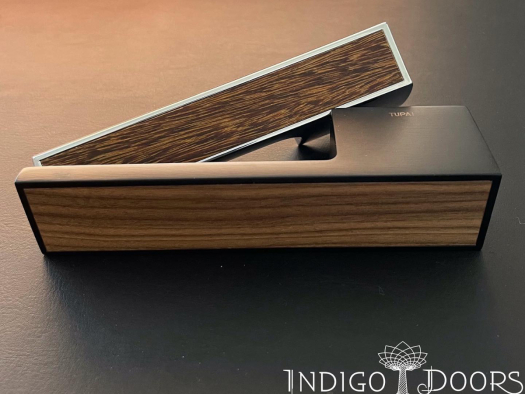
Hardware is one of the easiest ways to make an interior door feel modern. Long vertical pulls, low-profile levers, magnetic latches, concealed hinges and matte or satin finishes can update even a simple door. The best hardware finish depends on the home. Matte black can work well in a modern condo, but it can feel too graphic in a delicate pre-war apartment. Satin brass can warm up a townhouse, but it should not look overly shiny or decorative.
For New York apartments, I usually recommend restraint. If the apartment is small, hardware should not become visual noise. A simple lever in satin nickel, brushed brass, matte black or dark bronze is often enough. If the door is flush and minimalist, the hardware can be slightly more expressive. If the door has a profile, the hardware should be quieter.
For townhouses, hardware can carry more character. A modernized brownstone can handle unlacquered brass, dark bronze, aged nickel or refined black hardware, especially when the finish relates to lighting, stair railings, cabinet pulls or fireplace details. The goal is consistency, not uniformity. Matching every metal perfectly can look flat. Coordinating them thoughtfully feels more designed.
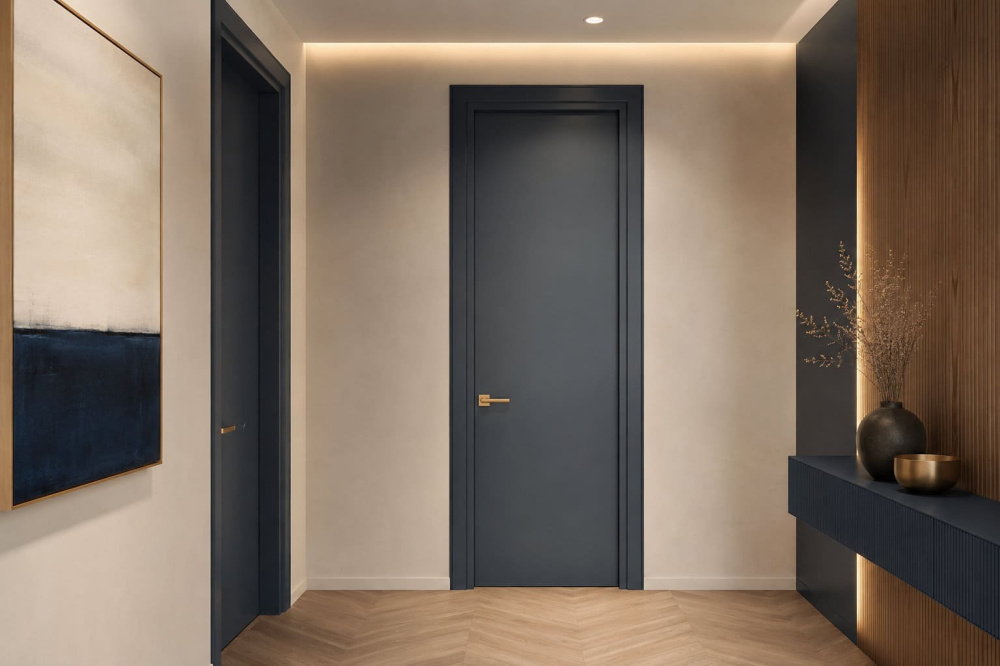
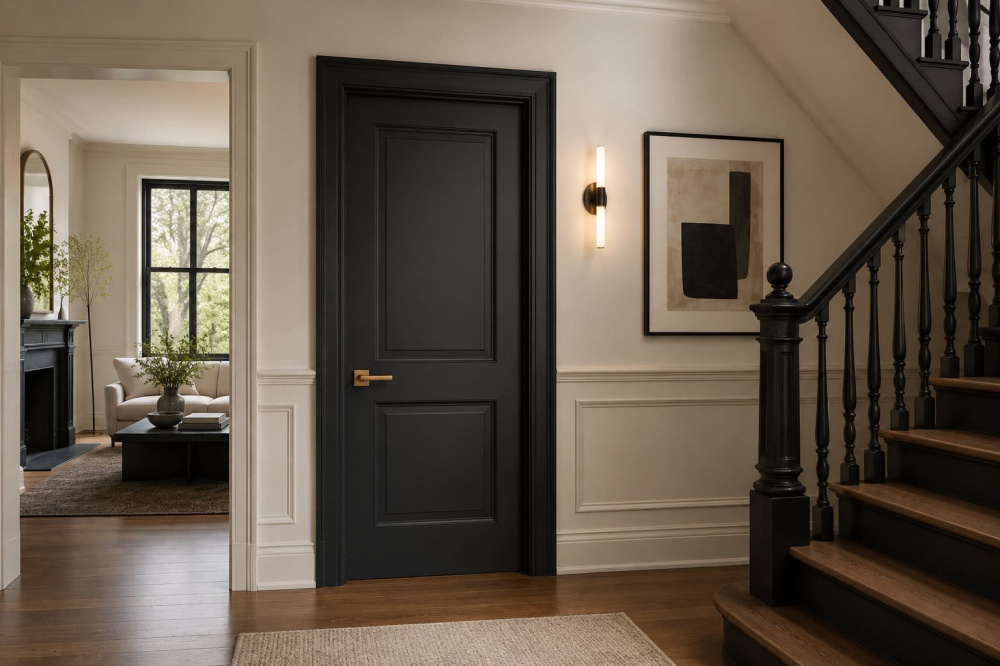
Door color should be considered with wall color, trim and floor tone. White doors with white trim remain timeless, but they are not the only sophisticated choice. A warm off-white door can make a pre-war apartment feel softer. A natural wood door can make a modern condo feel less cold. A deep painted door can add depth to a townhouse library, powder room or office.
Common mistakes to avoid
Modern interior doors can improve a New York home dramatically, but the wrong choices are easy to make. The most common mistakes usually come from treating doors as isolated products rather than parts of the architecture.
-
Choosing hollow-core doors for rooms that need privacy. They may save money upfront, but they often feel light and perform poorly in bedrooms and offices.
-
Installing pocket doors without checking the wall cavity. Plumbing, electrical lines, structure and wall depth can make the installation more complicated than expected.
-
Using the same door everywhere. Apartments and townhouses often need different solutions for bedrooms, offices, closets, baths and public rooms.
-
Ignoring building approvals. Co-op and condo rules can affect work hours, contractor access, insurance and renovation scope.
-
Over-modernizing historic rooms. Frameless doors can look beautiful in new construction, but they may feel wrong beside original brownstone trim, plaster and casing.
Another frequent mistake is selecting glass without thinking about acoustics. Frosted or fluted glass may solve the light problem, but it may not give enough sound separation for a bedroom or workroom. In New York, where work-from-home spaces are often carved out of living rooms, alcoves or secondary bedrooms, acoustic performance should be part of the decision.
A final mistake is forgetting the apartment entry door. Interior style upgrades should never compromise self-closing function or safety requirements on apartment and hallway doors. HPD specifically emphasizes that doors which stay open can allow smoke and fire to spread. Design matters, but compliance and safety come first.
Expert recommendation for apartments
For a modern New York apartment, I would build the door package around three priorities: space efficiency, acoustic comfort and visual calm. Most apartments do not need dramatic doors in every opening. They need better proportions, better cores, better hardware and smarter use of glass or sliding systems.
In a compact one-bedroom or two-bedroom apartment, solid-core flush doors are usually the best foundation. Use them for bedrooms and bathrooms, then consider one glass or fluted glass door for a home office, den or room that needs borrowed light. If a bathroom or closet door creates a swing conflict, replace it with a pocket door only if the wall conditions make sense.
In a larger condo, frameless or concealed doors can work beautifully, especially when the design is clean and architectural. These doors should align with millwork, ceiling height and wall finishes. They work best when the entire renovation language is modern, not when they are inserted into an otherwise traditional interior without support.
For pre-war apartments, I would be more careful. A slim Shaker door or refined flat panel with classic casing often gives the best balance. It feels updated, but it does not erase the apartment’s age. Painted finishes, upgraded hardware and solid-core construction can make a major difference without forcing a full stylistic reset.
Expert recommendation for townhouses and brownstones
For New York townhouses, I recommend a layered strategy. Keep the most character-sensitive door choices on the parlor level and main stair hall. Use refined panel profiles, glass transitions or restored pocket-door ideas where the architecture deserves it. Move cleaner, simpler doors to private floors, secondary rooms and modern additions.
A brownstone does not need to look old-fashioned, but it should not look generic. The best results come from pairing modern restraint with material depth. Slim Shaker doors, natural veneer, reeded glass, satin brass or bronze hardware and carefully proportioned casing can make the home feel current while preserving its architectural dignity.
If the townhouse is landmarked or located in a historic district, owners should separate interior design goals from exterior or permit-triggering work early. LPC explains that interior work can require approval when it needs a DOB permit, affects the exterior or involves a designated interior landmark. Even when a specific interior door choice is not the preservation issue, the broader renovation plan may be.
The strongest townhouse door plan usually feels collected rather than repetitive. Public rooms can have more presence. Bedrooms can be quieter. Service areas can be simpler. Glass can be used where light matters. Pocket doors can create flexibility. The final result should feel like one home with different layers, not a showroom of unrelated door trends.
Final thoughts on modern interior doors in New York
Modern Interior Doors in New York should be selected with more discipline than in many other markets. The city’s homes are too spatially constrained, too regulated and too architecturally specific for generic choices. The best door is not always the most expensive or the most fashionable. It is the one that fits the room, respects the building and improves daily life.
For apartments, prioritize clean profiles, solid-core construction, smart swing planning, pocket doors where space is tight and glass only where light sharing matters. For townhouses, prioritize proportion, material quality, historic compatibility and room-by-room hierarchy. The door package should feel modern, but it should also feel native to the home.
From an expert perspective, the most durable trends for New York are flush solid doors, slim Shaker profiles, pocket systems, frosted or fluted glass, warm wood veneer and carefully chosen painted finishes. The weakest choices are trend-first doors that ignore layout, approvals, acoustics or historic character.
A good modern door does not simply close a room. In New York, it edits the home. It controls movement, preserves privacy, carries light, softens noise and gives the interior its architectural rhythm. That is why choosing the right style matters so much in both apartments and townhouses.