
- Why Chicago apartments need a specific door strategy
- Flush doors for high-rise condos and minimalist interiors
- Slim Shaker doors for vintage apartments and updated condos
- Glass doors for light in compact city layouts
- Pocket and sliding doors for tight apartment spaces
- Best door styles by Chicago apartment type
- Materials that perform well in Chicago interiors
- Sound privacy in condos and multi-unit buildings
- Door color and hardware for a modern Chicago look
- Renovation approvals and permit considerations
- Matching door style to each room
- Common mistakes in Chicago apartment door projects
- Expert recommendation for Chicago apartments and condos
- Final thoughts on modern interior doors in Chicago
Modern interior door styles for Chicago apartments and condos should be selected with the city’s architecture, climate, building rules and interior layouts in mind. Chicago is not a one-style market. A condo in a glass high-rise, a converted loft in River North, a vintage unit in Lincoln Park, a two-flat in Logan Square, a courtyard apartment in Edgewater and a South Loop new build can all need different door solutions.
The city’s residential character is strongly shaped by multi-unit housing. The Chicago Architecture Center notes that two- and three-flat apartment buildings make up about a quarter of Chicago’s housing, while another CAC resource describes two-flats and their larger cousins as more than 30 percent of the city’s housing stock. That means many Chicago apartment and condo renovations happen inside narrow, layered, older residential buildings rather than only in new towers.
Climate also matters. The Illinois State Climatologist describes Chicago’s climate as continental, with cold winters, warm summers and frequent short fluctuations in temperature, humidity, cloudiness and wind direction. Lake Michigan moderates temperature and increases snowfall in the city. For interior doors, this means homeowners should think about material stability, humidity changes, heating seasons and the way older buildings move over time.
From an expert perspective, the best modern interior doors for Chicago apartments and condos are not the most dramatic or trend-heavy options. They are the doors that make compact rooms feel larger, improve privacy, control sound, borrow light from adjacent spaces and respect the building’s architectural character. In Chicago, a successful door choice must be stylish, practical and context-aware.
Why Chicago apartments need a specific door strategy
Interior doors in Chicago apartments often need to solve several problems at once. Many older units have long hallways, compact bedrooms, narrow bathrooms, small closets, vintage trim and less-than-perfectly-square openings. Newer condos may have open plans, glassy views, high ceilings, exposed concrete or minimal casing. A single door style rarely works equally well in both settings.
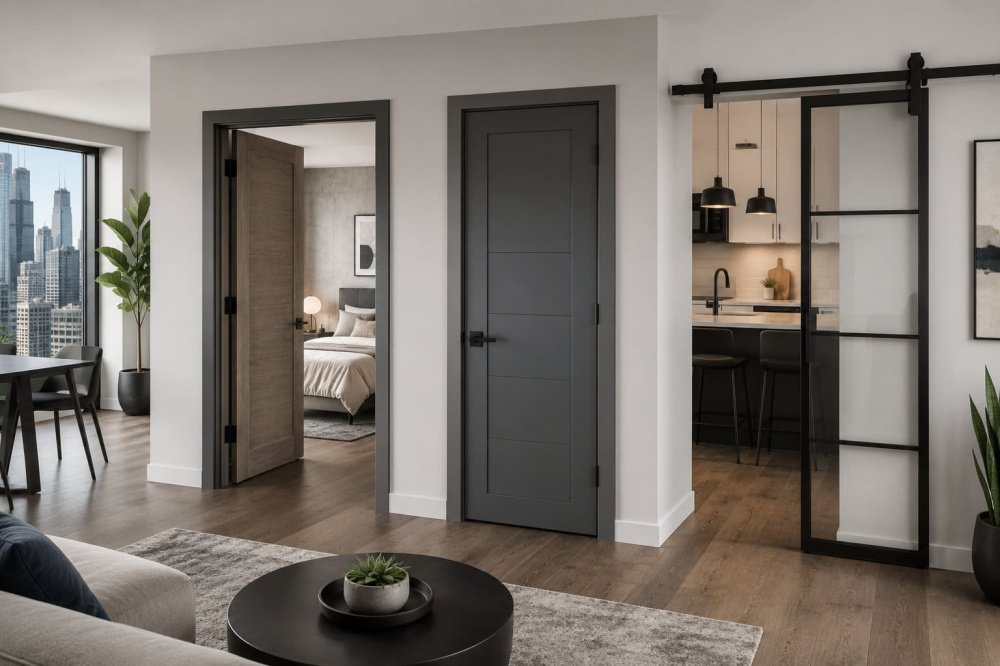
In vintage buildings, the challenge is usually balance. The homeowner may want a cleaner modern interior, but the building may still have original casing, hardwood floors, plaster walls, tall baseboards or traditional room proportions. A completely flat frameless door can look too severe if the surrounding architecture has historic depth. A slim Shaker or refined panel door often creates a better bridge.
In newer condos, the challenge is different. The interiors may already be clean and open, but they can feel visually flat if every door is a generic white slab. A higher-quality flush door, warm wood veneer, concealed hinge or muted painted finish can add architectural intent without cluttering the space.
A good Chicago apartment door should not simply look modern. It should make the unit feel more spacious, more private and more coherent with the building it belongs to.
This is why door planning should begin early in a renovation. Door slabs, frames, trim, hardware, swing direction and wall conditions are connected decisions. Waiting until the end often leads to basic replacement doors instead of a coordinated interior door package.
Flush doors for high-rise condos and minimalist interiors
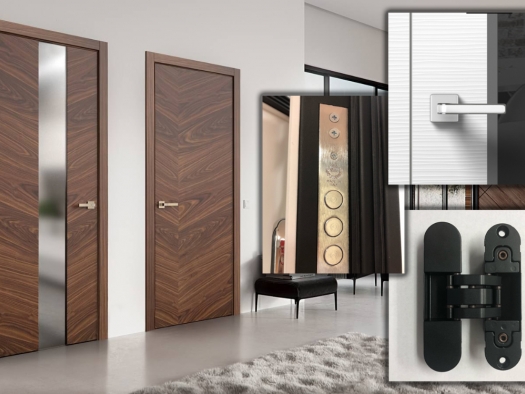
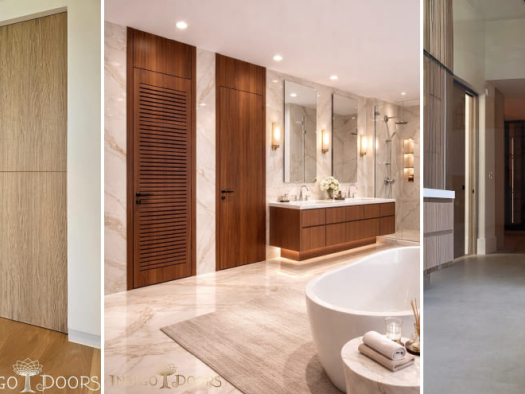
Flush doors are one of the strongest choices for modern Chicago condos, especially in high-rise buildings, newer developments and minimalist renovations. Their flat surface creates a calm wall plane and helps open layouts feel less busy. This can be especially useful in condos where several doors are visible from a living room, kitchen or entry corridor.
A flush door works best when it is solid-core and precisely installed. A lightweight hollow-core slab can feel cheap, even if it looks simple in product photos. A solid-core flush door with clean casing, aligned reveals and quality hardware feels much more architectural. In modern interiors, simple details expose poor execution quickly.
Flush doors are also effective in loft-style condos where exposed brick, timber, steel, concrete or ductwork already provide texture. In these spaces, the door should usually support the background rather than compete with it. A flat painted or wood veneer door can keep the interior from becoming visually chaotic.
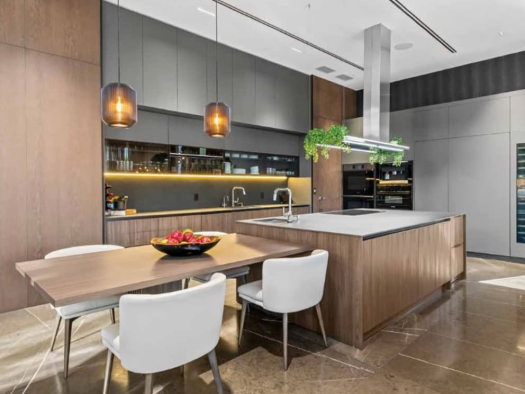
The best finishes for flush doors in Chicago condos include warm white, soft gray, greige, charcoal, walnut veneer and white oak veneer. Cold white can look too stark in winter light, especially in units with gray floors or limited natural warmth. A slightly warmer tone usually feels more comfortable year-round.
Slim Shaker doors for vintage apartments and updated condos
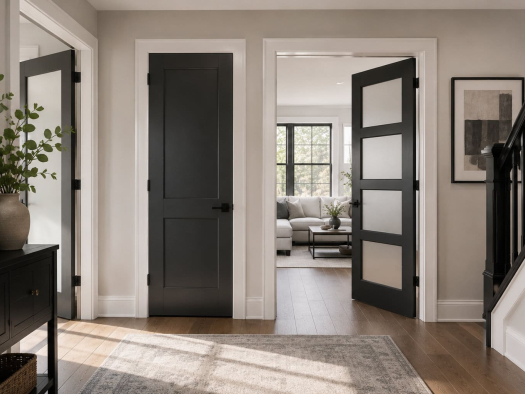
Slim Shaker doors are probably the most versatile modern interior door style for Chicago apartments and condos. They are clean enough for contemporary renovations but detailed enough for older buildings. This makes them a strong choice for vintage apartments, condo conversions, prewar units, courtyard buildings and transitional interiors.
Unlike ornate raised-panel doors, slim Shaker doors do not feel heavy. Unlike completely flat slabs, they do not feel empty. The profile adds a shadow line and architectural structure while keeping the overall look restrained. That balance is useful in Chicago homes where old and new elements often meet in the same room.
Slim Shaker doors also adapt well to color. White and off-white are safe for smaller apartments. Greige, muted blue, olive, taupe and charcoal can add depth without feeling overly trendy. Natural wood versions can work in lofts or renovated units where the design includes warm floors, exposed brick or wood cabinetry.
My expert recommendation is to use slim Shaker doors as the default option when the apartment has any visible traditional casing, original trim or classic room proportions. They modernize the interior without making the renovation feel disconnected from the building’s age.
Glass doors for light in compact city layouts
Chicago apartments often need more light between rooms. Older buildings may have deep floor plans, interior hallways, enclosed dining rooms or bedrooms that sit away from the best window exposure. Glass interior doors can help share daylight while still giving the room a sense of separation.
Clear glass works best between public spaces, such as a living room and dining room, or between a den and hallway. Frosted glass is better for offices, dressing rooms and secondary rooms where privacy matters. Fluted or reeded glass is one of the strongest modern choices because it filters views, softens light and adds texture without making the space feel heavy.
Glass doors are especially useful for home offices. Many Chicago condo owners have turned bedrooms, dens or alcoves into workspaces. A solid door gives more sound privacy, but a frosted or fluted glass door can prevent the office from feeling isolated or dark. The right choice depends on whether privacy or light is the greater need.
The caution is acoustic performance. Glass doors usually do not control sound as well as solid-core wood or engineered doors. For bedrooms, nurseries and serious work-from-home spaces, solid-core construction may be more important than borrowed light.
Pocket and sliding doors for tight apartment spaces
Pocket doors have a long relationship with Chicago interiors. The Chicago Architecture Center notes that in late-19th-century homes, pocket doors provided an elegant way to close off rooms while saving space. That historic logic still applies today, especially in compact apartments and condos.
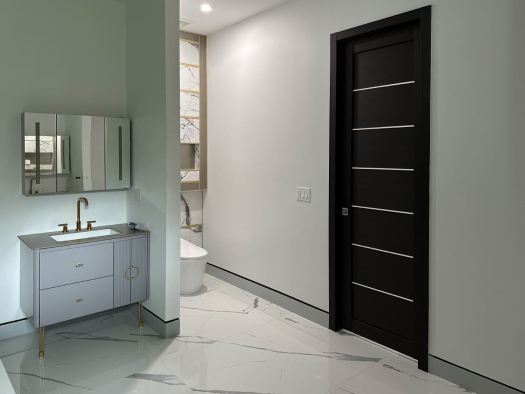
A pocket door can be a strong solution for a small bathroom, laundry closet, pantry, den or home office. It eliminates the swing path of a hinged door and allows furniture, fixtures and circulation to work better. In a city apartment, reclaiming even a few square feet can make a real difference.
Pocket doors must be planned carefully. The wall cavity has to be available, and plumbing, electrical lines, studs or structural conditions may limit what is possible. In older Chicago buildings, wall conditions can be unpredictable. A contractor should evaluate the opening before the door is ordered.
Surface-mounted sliding doors are easier to install, but they are not always more refined. Rustic barn-style doors may work in a casual loft or pantry, but they are usually not ideal for bedrooms and bathrooms because they often leave gaps and provide weaker sound privacy. A clean pocket system or modern sliding panel usually looks better in a polished condo renovation.
Best door styles by Chicago apartment type
Different Chicago buildings call for different modern door strategies. The best style depends on the unit’s age, layout, ceiling height, trim, light exposure and level of renovation. A glassy downtown condo and a vintage North Side apartment should not use the same door package without adjustment.
| Chicago apartment or condo type | Best modern door styles | Recommended finishes | Expert note |
|---|---|---|---|
| High-rise condo | Flush, frameless, tall slab, concealed hinge | Warm white, charcoal, walnut, white oak | Use simple doors with premium hardware |
| Vintage apartment | Slim Shaker, refined panel, glass French-style doors | Off-white, cream, muted blue, natural wood | Respect existing casing and proportions |
| Two-flat or three-flat condo | Shaker, pocket doors, solid-core panel doors | Warm white, greige, oak, bronze hardware | Balance historic layout with modern function |
| Loft condo | Flush, wood veneer, glass, industrial-style slim frame | Walnut, blackened bronze, white oak, charcoal | Let brick, timber or concrete remain the focus |
| Courtyard apartment | Slim Shaker, frosted glass, pocket doors | Soft white, pale gray, taupe | Borrow light where interior rooms feel dark |
| New construction condo | Flush, frameless, tall slab, frosted glass | Greige, warm white, wood veneer | Avoid builder-grade hollow-core upgrades |
| Small studio or one-bedroom | Flush, pocket, frosted glass, mirrored closet doors | White, warm neutral, light oak | Reduce visual interruption and save swing space |
| Luxury condo | Tall slab, veneer, concealed hinge, glass double doors | Walnut, oak, dark bronze, warm neutrals | Doors should match the scale of the unit |
This table should be treated as a planning tool, not a fixed rule. Many Chicago homes blend categories. A loft may have warm traditional furniture. A vintage apartment may be renovated in a modern way. A high-rise condo may need more texture and warmth than a minimalist door package provides.
Materials that perform well in Chicago interiors
Material selection is important in Chicago because homes experience heating seasons, humidity fluctuations and cold winters. Wood and wood-based products respond to moisture changes. Purdue Extension explains that wood changes moisture content in response to daily and seasonal relative humidity, swelling when air is humid and shrinking when air is dry.
For Chicago apartments and condos, solid-core engineered doors are usually the best all-around choice. They feel more substantial than hollow-core doors, provide better privacy and offer improved sound control. In multi-unit buildings, sound is not a minor issue. Bedrooms, offices and bathrooms benefit from doors that feel heavier and close more securely.
MDF doors with quality factory finishes are practical for painted interiors. They are especially useful for Shaker and panel styles. Wood veneer doors are excellent for modern condos, lofts and higher-end renovations because they add warmth without the movement concerns of some solid wood slabs.
Solid wood doors can be beautiful in vintage apartments and luxury renovations, but they need proper acclimation, finishing and installation. The door should be sealed on all exposed edges, not only on the two faces. This matters in Chicago because indoor humidity can shift between dry heated winter air and more humid summer conditions.
Sound privacy in condos and multi-unit buildings
Sound control is one of the most important reasons to upgrade interior doors in Chicago apartments and condos. Multi-unit living already involves shared walls, hallway noise, elevator sounds, mechanical systems and neighbors above or below. Inside the unit, bedrooms and offices often need more privacy than builder-grade doors provide.
A solid-core door will usually feel and perform better than a hollow-core door. It will not turn a room into a recording studio, but it can reduce the lightweight, echo-prone feeling of many apartment interiors. Combined with proper gaps, a good latch and quality installation, the door can make the room feel more private.
Home offices deserve special attention. A glass door may look beautiful, but a solid-core door is usually better when calls, meetings or concentration matter. If the room lacks light, frosted glass can still be considered, but the homeowner should understand the trade-off.
In a Chicago condo, privacy is not only about what people can see. It is also about what people can hear through the door during daily life.
Bedrooms, bathrooms, offices and media rooms should usually receive the best-performing doors in the unit. Closets, utility spaces and secondary storage rooms can use simpler solutions if the budget needs to be controlled.
Door color and hardware for a modern Chicago look
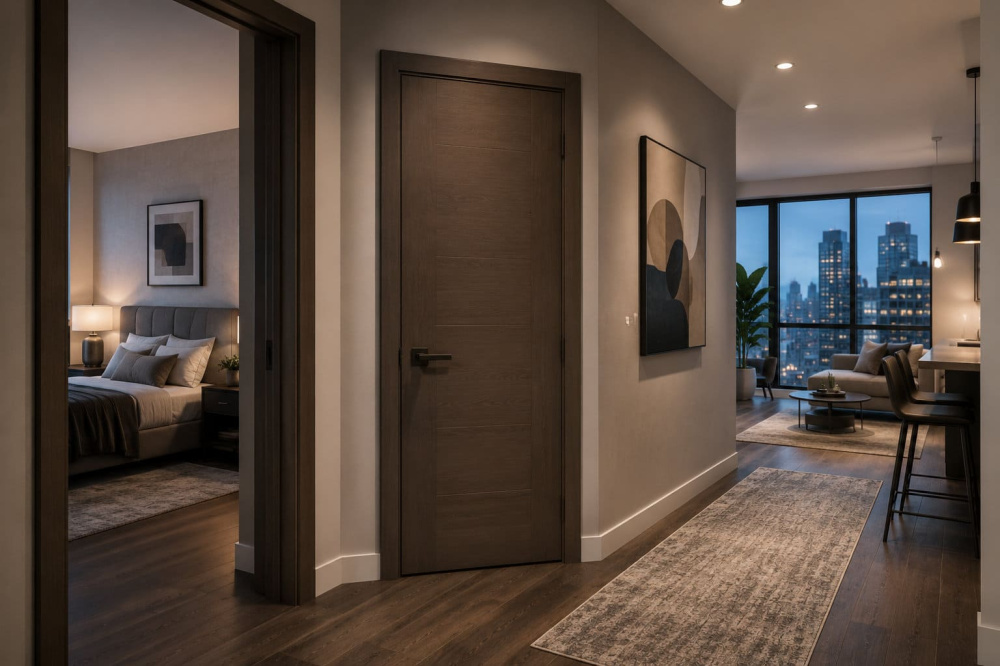
Chicago interiors often benefit from warmer, more layered door finishes. The city has many brick, limestone, wood floor, plaster, concrete and steel contexts. A door color should relate to these materials rather than follow a trend in isolation.
Warm white, soft ivory, taupe, greige, muted blue, olive, charcoal, walnut and white oak are all strong options. White doors with white trim remain classic, especially in smaller apartments. But darker doors can work beautifully in a den, office, primary bedroom or loft hallway when the rest of the palette supports them.
Hardware should be chosen with the building type in mind. Matte black can work in lofts and contemporary condos, but it can feel harsh in some vintage apartments. Satin brass, aged brass, dark bronze, blackened bronze and satin nickel often feel more adaptable. In older units, hardware with warmth usually relates better to original floors and trim.
For flush doors, hardware can carry more visual weight because the slab is quiet. For Shaker and panel doors, simpler hardware usually works better. Glass doors need slim, refined hardware so the door does not become visually bulky.
Renovation approvals and permit considerations
Chicago condo and apartment owners should not treat every door project as a purely cosmetic change. The City of Chicago’s Express Permit Program covers certain nonstructural interior alterations, and the city’s permit guide lists in-kind replacement of non-fire-rated interior doors among work that may be treated differently from more complex permitted work.
The practical point is that replacing a simple interior door slab is different from changing a rated door, altering a wall, relocating an opening or modifying shared building systems. Condo associations may also have rules about contractor insurance, work hours, elevator use, noise, debris removal and renovation approvals. These rules can affect even projects that feel small.
Apartment entry doors should be treated separately from bedroom or closet doors. A corridor-facing door may involve fire rating, self-closing hardware, building rules or code requirements. Homeowners should not replace these doors based only on appearance.
Before ordering doors, confirm whether the project includes slab replacement, frame replacement, swing changes, pocket-door framing, wall alteration or any door connected to a shared corridor. These details affect approvals, cost and installation complexity.
Matching door style to each room
A strong Chicago door package should be consistent, but not identical everywhere. Every room has a different job. A bedroom needs quiet. A bathroom needs privacy and moisture resistance. A den may need borrowed light. A pantry needs easy access. A closet needs clearance.
Use this room-by-room approach:
-
Bedrooms should usually receive solid-core flush, Shaker or refined panel doors for better privacy and sound control.
-
Bathrooms need stable painted doors, sealed edges, proper ventilation and hardware that closes securely.
-
Home offices can use solid-core doors for acoustics or frosted glass doors when light is more important.
-
Dens and dining rooms can use glass doors, double doors or slim Shaker doors to separate spaces without making the unit feel closed.
-
Closets can use simple hinged, bypass, mirrored or pocket systems depending on clearance and storage access.
-
Laundry closets and utility rooms benefit from pocket, bifold or ventilation-conscious door solutions when the layout is tight.
-
Entry-adjacent rooms should use doors that look polished from the main living area because they are seen often.
This approach helps homeowners spend the budget intelligently. It is usually worth upgrading bedroom, office and main hallway doors first. Secondary closet doors can be simpler unless they are highly visible.
A coordinated mix often looks better than one repeated door everywhere. For example, a Chicago condo might use flush solid-core bedroom doors, a frosted glass office door and a pocket door for the powder room. The result feels intentional rather than repetitive.
Common mistakes in Chicago apartment door projects
One common mistake is ignoring the existing trim. A sleek frameless slab can look wrong inside traditional casing. A heavy traditional panel can look dated in a modern condo. Door and casing should be treated as one visual system.
Another mistake is choosing hollow-core doors for important rooms. They may be less expensive, but they often feel light, transmit more sound and reduce the perceived quality of the renovation. In a compact condo, every touchpoint matters. A weak door is noticed every day.
A third mistake is overusing glass. Glass can brighten a room, but it is not always right for bedrooms, bathrooms or media spaces. Light and privacy must be balanced. Frosted and fluted glass are useful, but they should be used where they solve a real problem.
The final mistake is not checking swing direction and clearance. In small Chicago apartments, a door that opens into the wrong area can block a closet, hit a vanity or interfere with furniture. Modern style means very little if the room becomes harder to use.
Expert recommendation for Chicago apartments and condos
For most Chicago apartments, my first recommendation is a solid-core slim Shaker door. It is modern, adaptable and compatible with many vintage and transitional interiors. It respects older casing better than a flat slab, but it does not feel old-fashioned.
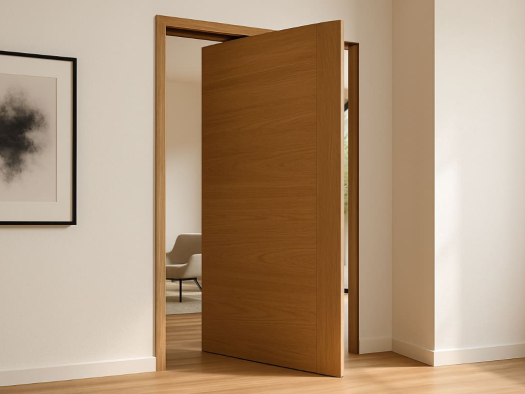
For high-rise condos and fully modern interiors, I would shift toward solid-core flush doors, taller slabs, concealed hinges and wood veneer where the budget allows. These doors work well when the surrounding architecture is already clean. They should be paired with premium hardware because minimalist doors rely heavily on detail quality.
For lofts, I would use restraint. Exposed brick, concrete, beams and ductwork already have strong visual presence. Flush wood veneer doors, blackened bronze hardware and glass partitions can work well, but overly decorative doors usually compete with the loft character.
For small apartments and studios, I would focus on space-saving and visual calm. Flush doors, pocket doors, frosted glass and light finishes can make the unit feel more open. The goal is not to make every door disappear, but to reduce unnecessary visual interruption.
Final thoughts on modern interior doors in Chicago
Modern Interior Door Styles for Chicago Apartments and Condos should be chosen through the combined lens of architecture, space, climate, privacy and building rules. Chicago homes range from historic two-flats and courtyard apartments to high-rise condos and industrial lofts. A good door package should respond to that variety.
The most reliable modern styles are flush doors for contemporary condos, slim Shaker doors for vintage and transitional apartments, glass doors for light sharing, pocket doors for tight layouts and wood veneer doors for warmth. Solid-core construction is usually worth the upgrade, especially for bedrooms, offices and rooms where privacy matters.
The best Chicago interiors do not use doors as isolated decorative items. They use them to improve the rhythm of the home. A door can make a hallway feel calmer, a bedroom feel quieter, an office feel brighter or a compact bathroom work better.
A successful modern interior door should look like it belongs to the building and the renovation at the same time. In Chicago, that balance is everything.