
- Define Your Interior Design Style First
- Choose the Right Door Type for Each Room
- Consider Space Planning and Layout Efficiency
- Evaluate Privacy and Sound Control
- Select Materials and Finishes Carefully
- Think About Long Term Durability and Maintenance
- Align Your Budget with Performance Expectations
- Match Interior Doors to Ceiling Height and Proportions
- Why Choosing the Right Interior Doors Matters
Choosing the right interior doors for your home is one of the most important decisions in residential design. Interior doors influence privacy, light flow, noise control, layout efficiency, and overall architectural character. In modern American homes — especially in fast-growing markets like Florida — doors are no longer secondary details. They are essential design elements that impact daily living.
Whether you are building a new home or upgrading existing spaces, understanding how to select the right interior door type, style, material, and configuration will ensure long-term performance and visual harmony.
At Indigo Doors, we manufacture and supply premium interior doors nationwide from our Florida headquarters, offering Modern Interior Doors, Royal Collection, Frameless Doors Invisible Doors, and Classic Collection options in multiple configurations.
Define Your Interior Design Style First
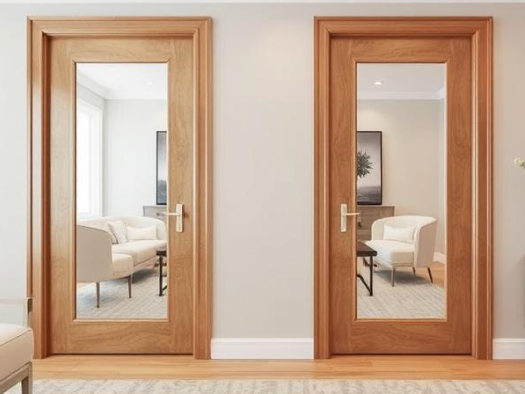
Before selecting door types or finishes, define the overall architectural direction of your home. Interior doors must align with the design language of the space.
For example:
-
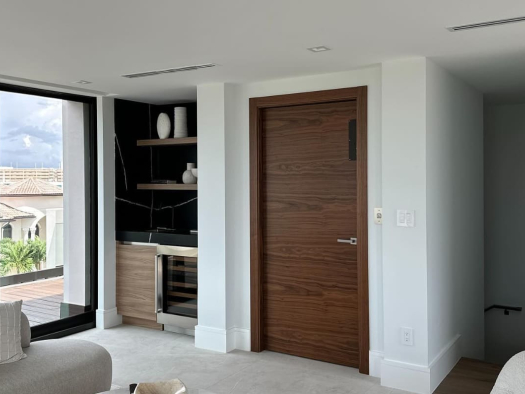
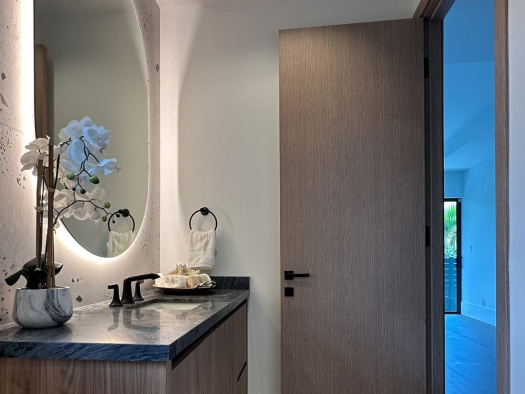
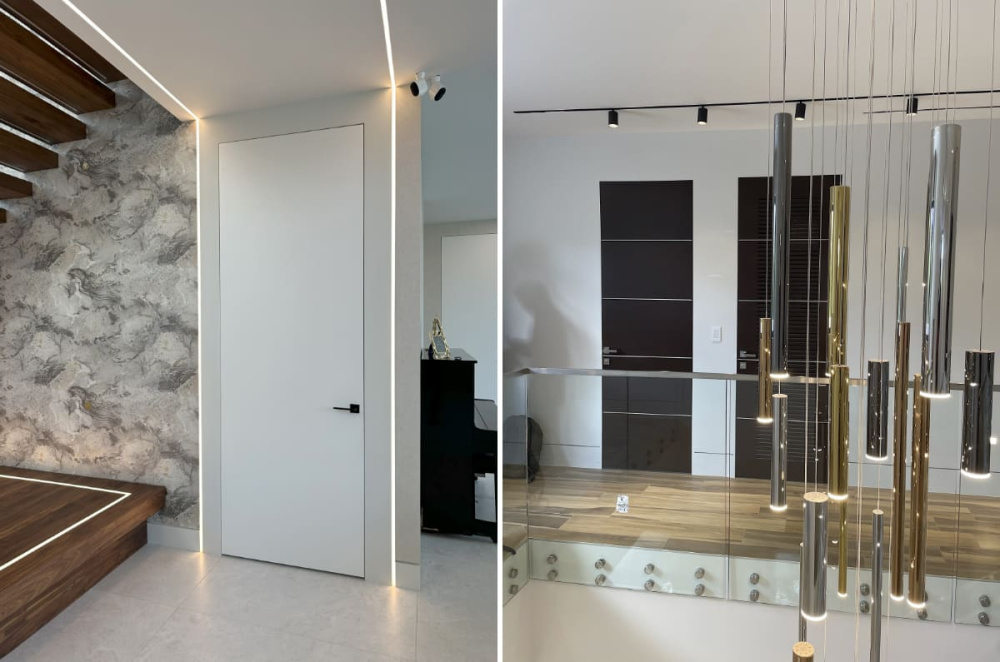
Minimalist interiors favor flush or frameless doors
-
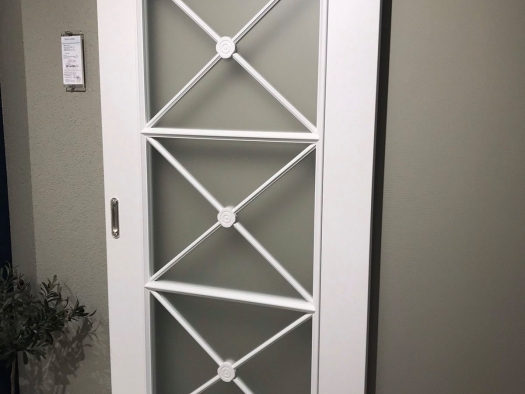
Transitional homes often use refined panel doors
-
Contemporary luxury spaces may incorporate pivot systems
-
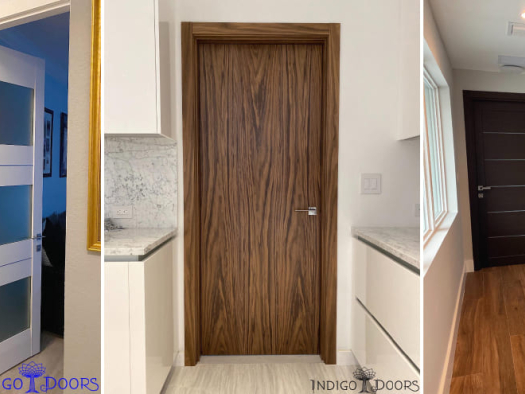
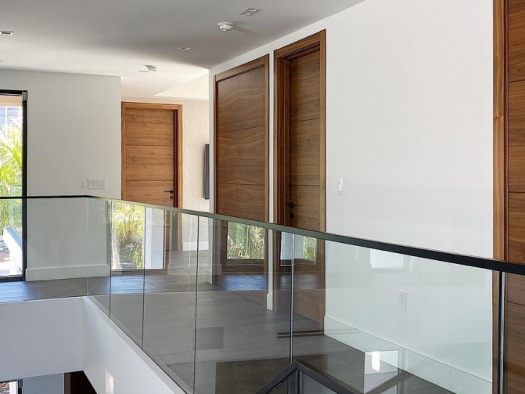
Coastal Florida homes often blend natural veneer finishes
Choosing a door style without considering architectural context can create visual inconsistency.
“Interior doors should complement the home’s design — not compete with it.”
Consistency across rooms enhances property value and creates a cohesive aesthetic experience.
Choose the Right Door Type for Each Room
Different rooms require different functionality. Selecting the appropriate interior door type ensures both comfort and efficiency.
Common interior door types include:
-
Roto and Magic systems
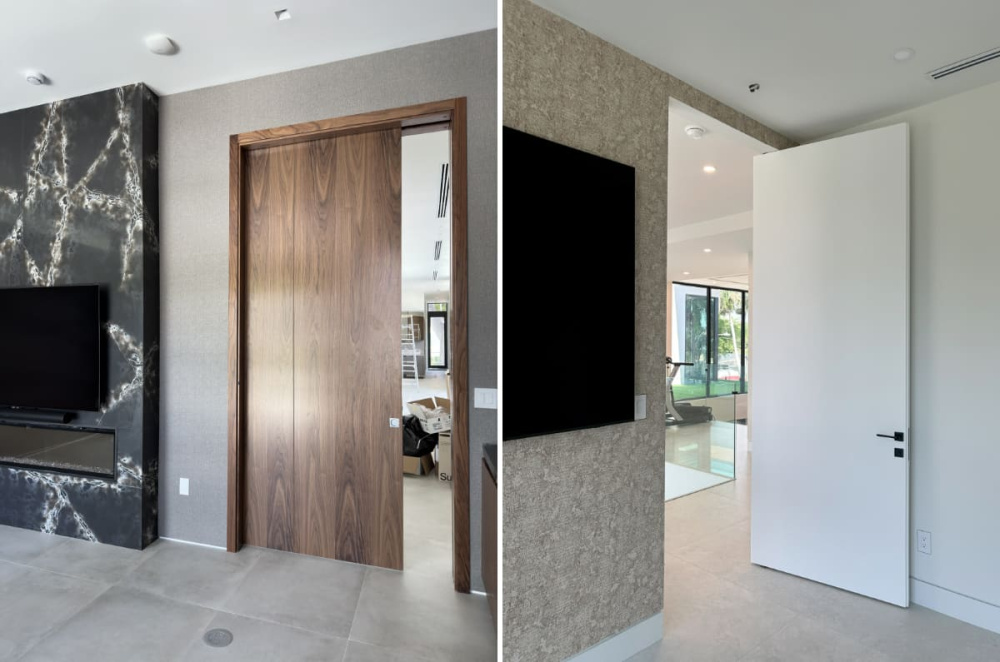
Swing doors remain the most versatile option for bedrooms and bathrooms. Pocket doors are ideal for compact spaces. Barn doors add decorative impact but may provide less acoustic privacy. Pivot doors are excellent for oversized or statement transitions.
Each type has distinct structural and spatial requirements, so evaluating room dimensions is essential.
Consider Space Planning and Layout Efficiency
Interior doors directly affect how space functions. In smaller homes or condos, optimizing layout is critical.
Pocket doors eliminate swing clearance. Bypass doors work efficiently in closets. Bi-fold doors are ideal for tight utility areas.
When evaluating space efficiency, ask:
-
Does the door need full clearance to open
-
Is wall space available for sliding systems
-
Will furniture placement interfere with door movement
-
Is ceiling height sufficient for pivot systems
Proper planning prevents costly adjustments later in the project.
Evaluate Privacy and Sound Control
Bedrooms, bathrooms, and home offices require stronger acoustic separation than living areas.
Swing doors with solid cores typically provide excellent privacy. Pocket doors can perform well when properly sealed. Barn doors may leave small gaps that reduce sound isolation.
Key privacy considerations include:
-
Door thickness
-
Core construction
-
Frame alignment
-
Hardware quality
For homes with remote workspaces or growing families, prioritizing privacy can significantly improve comfort.
Select Materials and Finishes Carefully
The finish of your interior doors affects durability, maintenance, and aesthetic impact.
Popular material and finish options include:
-
Wood veneer for natural warmth
-
Matte lacquer for minimalist appeal
-
High-gloss finishes for contemporary impact
-
Glass panels for light transmission
In Florida’s humid climate, selecting properly engineered materials ensures long-term stability. High-quality manufacturing reduces the risk of warping and surface wear.
Glass inserts can brighten interiors, while solid panels enhance privacy.
“The right finish balances beauty with performance.”
Think About Long Term Durability and Maintenance
Interior doors are used daily. Investing in quality engineering ensures longevity.
Important durability factors include:
-
Hardware strength
-
Surface resistance
-
Core construction
-
Environmental stability
Pivot systems distribute weight vertically, reducing hinge stress. Traditional swing doors provide proven reliability. Sliding systems must use smooth track mechanisms for consistent performance.
Selecting a reputable manufacturer ensures that doors maintain alignment and structural integrity over time.
Align Your Budget with Performance Expectations
Budget planning should consider more than just the initial purchase price. Installation complexity, structural preparation, and hardware quality influence total cost.
When comparing options:
-
Evaluate structural requirements
-
Consider long-term maintenance
-
Assess design compatibility
-
Prioritize manufacturing quality
Premium interior doors enhance resale value and buyer perception. In competitive real estate markets across the United States, quality finishes can differentiate a property.
Match Interior Doors to Ceiling Height and Proportions
Door proportions should align with ceiling height and room scale. Standard-height doors work well in traditional spaces, while taller doors emphasize verticality in modern homes.
Pivot doors and frameless systems often complement high ceilings. Classic panel doors add structure to medium-height rooms.
Maintaining proportional balance ensures architectural harmony throughout the home.
Why Choosing the Right Interior Doors Matters
Interior doors define how rooms connect, how light moves, and how spaces transition. Poorly selected doors can disrupt flow, reduce functionality, and compromise design integrity.
The right interior doors should deliver:
-
Visual consistency
-
Functional efficiency
-
Privacy where needed
-
Long-term durability
-
Architectural enhancement
At Indigo Doors, we manufacture and supply Modern Interior Doors, Royal Collection, Frameless Doors Invisible Doors, and Classic Collection interior doors in configurations including swing, double swing French, pocket, barn, bypass, bi-fold, pivot, roto, and Magic systems.
From our Florida headquarters, we serve homeowners and designers nationwide across the United States. Choosing the right interior doors is not just about filling openings — it is about shaping the way your home feels every day.