
- The Relationship Between Doors and Spatial Perception
- How Solid Doors Can Limit Light Flow
- Using Glass to Support Light and Openness
- Frameless Doors and Visual Continuity
- Door Placement and Sightlines
- Sliding Doors and Flexible Light Control
- Door Color and Its Impact on Brightness
- Minimalist Door Design and Visual Lightness
- How Doors Influence Open-Concept Living
- Creating Brighter, More Spacious Interiors with Smart Door Choices
Interior doors do far more than separate rooms. They influence how light travels through a home, how open or enclosed spaces feel, and how smoothly rooms connect with one another. In modern interiors, door design plays a quiet but powerful role in shaping spatial perception.
Understanding how interior doors affect space and light allows homeowners to make smarter design choices that improve comfort, openness, and visual balance.
“Light doesn’t stop at walls — it stops at design decisions.”
The Relationship Between Doors and Spatial Perception
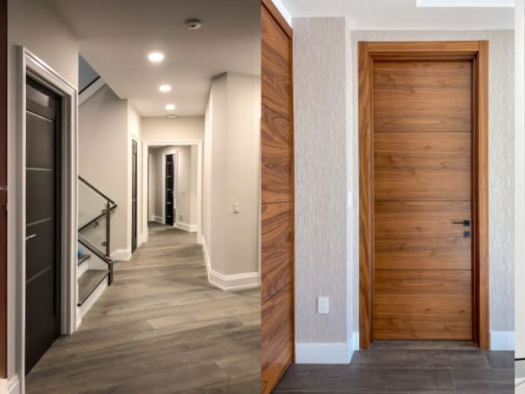
Space is not defined only by square footage. It is also defined by sightlines, transitions, and how the eye moves through an interior. Interior doors act as visual thresholds, either extending the sense of space or breaking it abruptly.
A door that feels heavy or visually dominant can make a room feel smaller, while a well-chosen door can visually expand the same space without changing its size.
Key spatial factors influenced by doors include:
- Continuity between rooms
- Visual depth and perspective
- Perceived openness of layouts
Doors shape how we experience space, not just how we move through it.
How Solid Doors Can Limit Light Flow
Solid interior doors provide privacy and separation, but they can also block natural light when used between bright areas. In homes with limited windows or compact layouts, this can result in darker, more enclosed interiors.
When solid doors interrupt light paths, rooms may require additional artificial lighting to compensate.
Common issues caused by solid doors include:
- Reduced daylight penetration
- Sharper contrasts between rooms
- A more segmented interior feel
Dark transitions often feel smaller, even when the rooms themselves are not.
Using Glass to Support Light and Openness
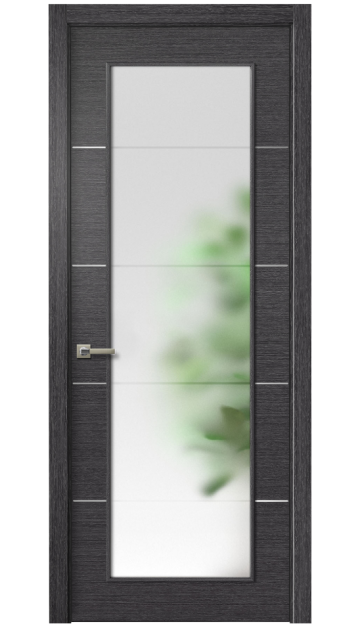
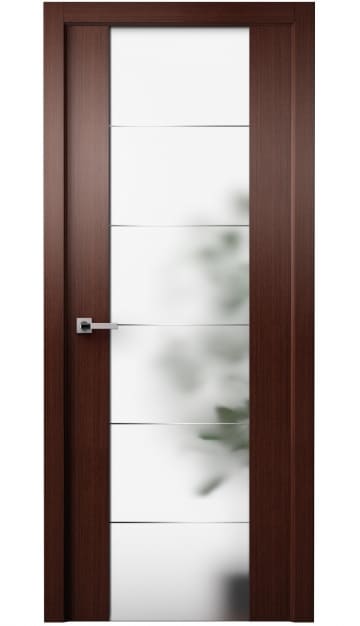
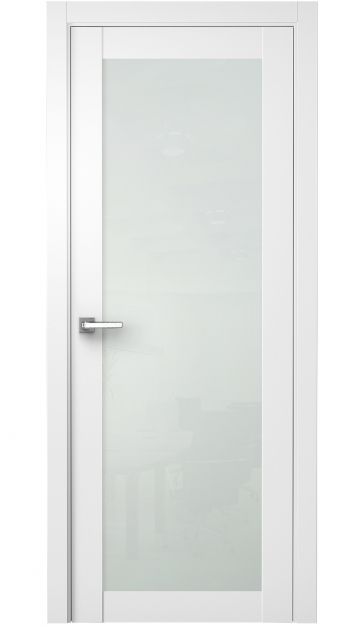
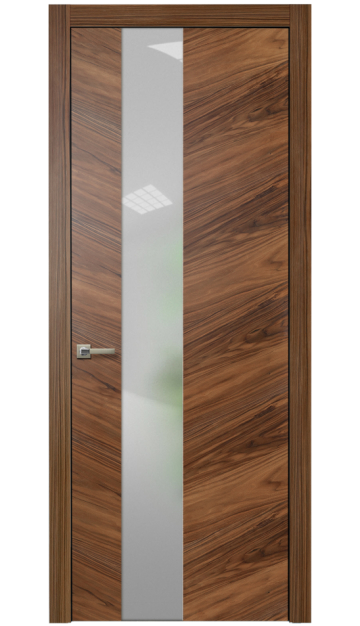
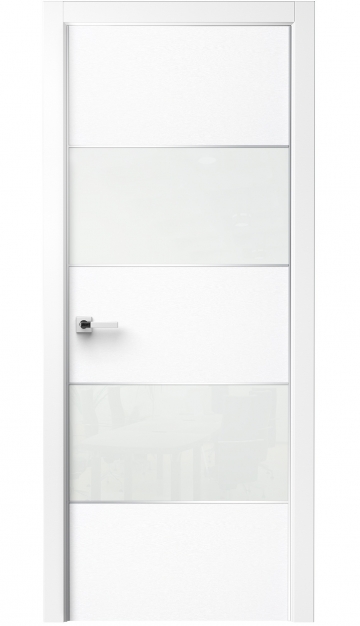
Glass interior doors are one of the most effective ways to support light flow without fully opening spaces. By allowing light to pass through, they maintain separation while enhancing brightness and depth.
Clear, frosted, or lightly textured glass can be used depending on the desired balance between openness and privacy.
Benefits of glass interior doors:
- Improved natural light distribution
- Visual connection between spaces
- A lighter, more open atmosphere
Light passing through doors changes how the entire home feels.
Frameless Doors and Visual Continuity
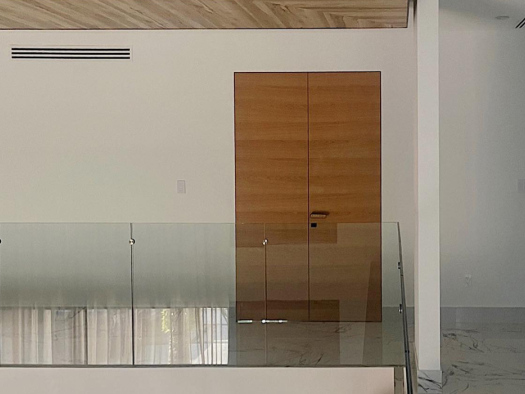
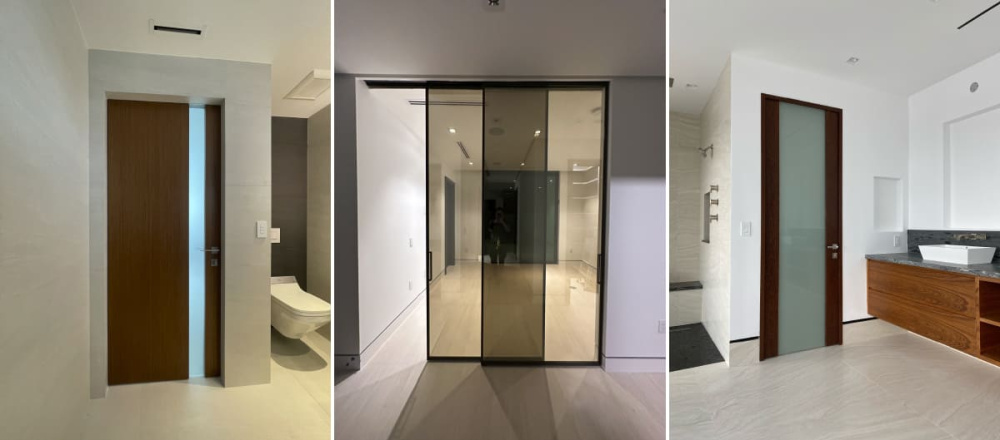
Frameless interior doors sit flush with the wall, reducing visual breaks and helping spaces feel more continuous. This design approach is especially effective in modern interiors where clean lines and simplicity matter.
When finished to match the surrounding walls, frameless doors almost disappear, allowing light and space to take visual priority.
Key advantages of frameless doors include:
- Fewer visual interruptions
- Cleaner sightlines across rooms
- Enhanced architectural flow
“When the door blends in, the space stands out.”
Door Placement and Sightlines
Where a door is placed can be just as important as the door itself. Poor placement can interrupt sightlines and block light paths, while thoughtful positioning can extend views and create a stronger sense of openness.
Doors aligned with windows, hallways, or open areas help guide light deeper into the home.
Smart placement considerations include:
- Aligning doors with natural light sources
- Avoiding unnecessary visual barriers
- Supporting long, uninterrupted views
Good design allows the eye to travel freely.
Sliding Doors and Flexible Light Control
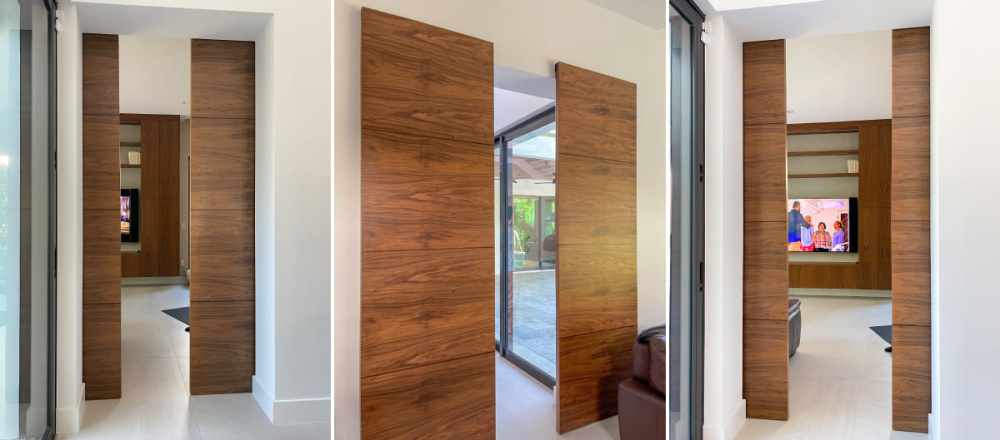
Sliding doors offer a unique advantage when it comes to managing space and light. Because they move parallel to walls, they allow rooms to open and close without blocking light paths or requiring swing clearance.
In open-concept or semi-open layouts, sliding doors provide flexibility without visual heaviness.
Sliding doors are effective because:
- They support adaptable layouts
- They reduce physical and visual obstruction
- They maintain cleaner transitions
Flexibility often leads to brighter, more comfortable interiors.
Door Color and Its Impact on Brightness
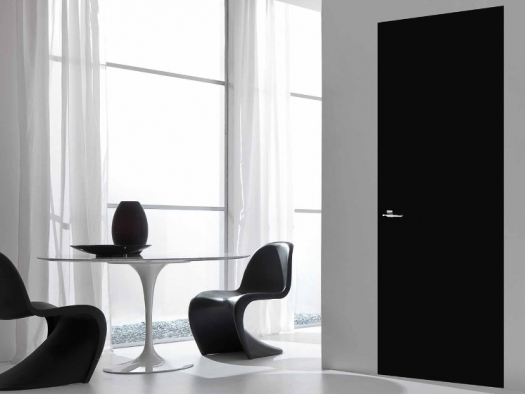
Color plays a critical role in how doors affect light. Dark or high-contrast doors can visually anchor a space but may also absorb light and reduce perceived openness.
Lighter tones, neutral colors, and wall-matching finishes help reflect light and support continuity.
Color strategies that enhance space and light:
- Matching door color to walls
- Using soft neutrals instead of stark contrasts
- Avoiding overly dark finishes in small or dim areas
“Color can either trap light or let it travel.”
Minimalist Door Design and Visual Lightness
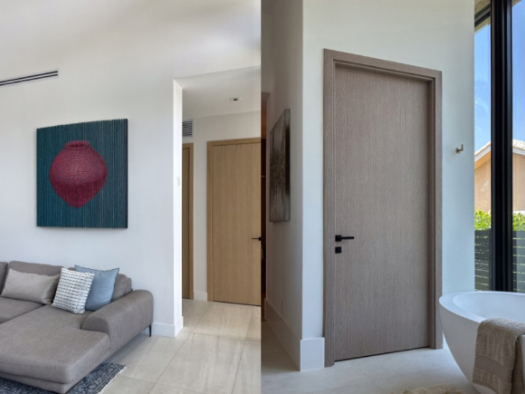
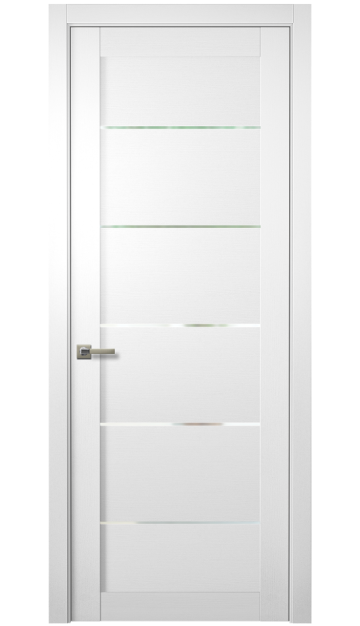
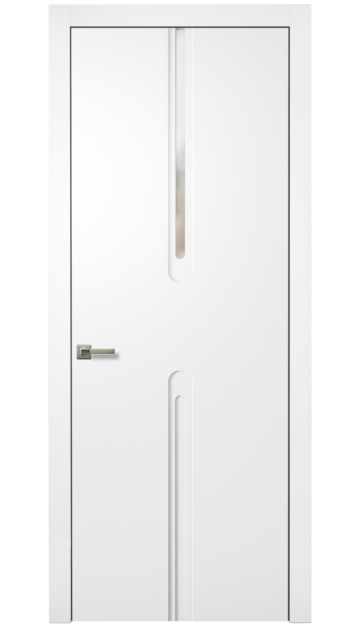
Doors with heavy detailing, deep panels, or decorative elements tend to draw attention and visually weigh down a space. In contrast, minimalist door designs feel lighter and more compatible with bright interiors.
Flat panels, subtle textures, and clean proportions allow light and space to remain the focus.
Minimalist design benefits include:
- Reduced visual noise
- Greater sense of openness
- Strong compatibility with modern interiors
Visual lightness often matters as much as physical light.
How Doors Influence Open-Concept Living
Open-concept homes rely on light flow and visual connection to feel cohesive. Interior doors in these spaces should support openness rather than undermine it.
Doors that can visually disappear or allow light to pass through help preserve the open feel while still offering functional separation when needed.
Guidelines for open-concept interiors:
- Use doors that maintain sightlines
- Avoid heavy visual barriers
- Prioritize flexibility and continuity
The best open spaces still need doors — just the right ones.

Creating Brighter, More Spacious Interiors with Smart Door Choices
Interior doors are powerful tools in shaping how a home feels. By considering door type, material, color, and placement, it is possible to significantly improve light flow and spatial perception without structural changes.
The most effective choices focus on:
- Supporting natural light
- Reducing visual interruption
- Enhancing continuity between rooms
When doors work with light instead of against it, interiors feel naturally larger and more welcoming.