
- How Interior Door Styles Shape Space Functionality and Modern Home Design
- Why Interior Door Styles Matter in Home Design
- How Door Types Influence Space Efficiency
- Visual Impact of Different Interior Door Styles
- How Interior Doors Affect Light and Openness
- Choosing Door Styles Based on Room Function
- Modern vs Classic Interior Door Styles
- The Role of Materials in Door Design and Performance
- How Interior Doors Influence Flow and Movement
- Conclusion How Interior Door Styles Affect Home Design and Space
How Interior Door Styles Shape Space Functionality and Modern Home Design
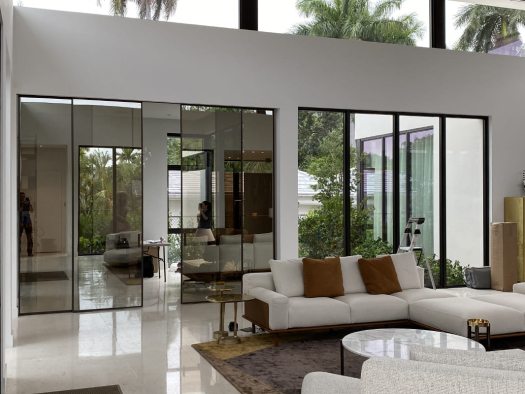
Interior doors are often overlooked in home design, yet they play a critical role in shaping both the visual identity and functionality of a space. The style, type, and material of a door can influence how rooms feel, how light moves, and how efficiently space is used. Choosing the right interior door styles is not just a finishing detail — it is a strategic design decision.
In modern homes, where layout, flow, and aesthetics are closely connected, interior doors become an essential element that ties everything together.
Why Interior Door Styles Matter in Home Design
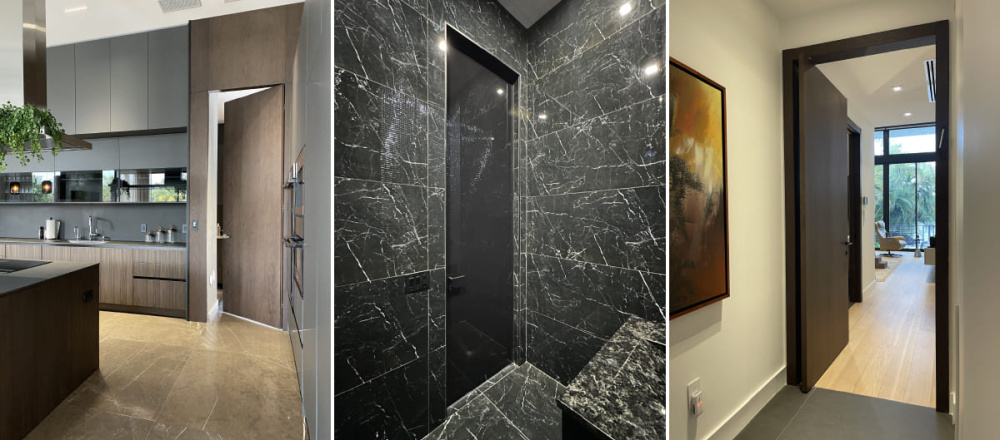
Interior doors are more than separators between rooms. They define transitions, guide movement, and contribute to the overall atmosphere of a home. A well-chosen door can enhance architectural consistency, while the wrong choice can disrupt the entire design.
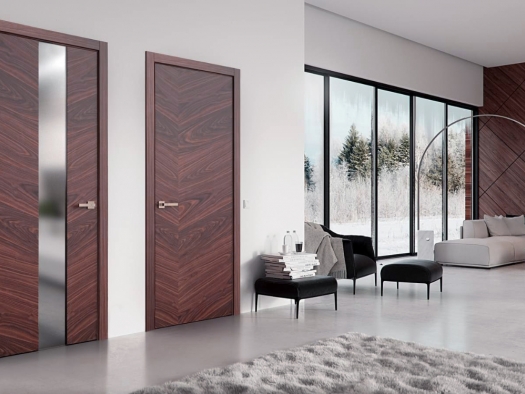
Different styles create different impressions. Minimalist doors support clean and modern interiors, while paneled or decorative doors add depth and character. The choice of door style can either blend seamlessly with the surroundings or act as a focal point.
Another important aspect is how doors influence perception. A sleek, flush door can make a space feel larger and more open, while heavier, detailed doors can create a sense of structure and definition. This makes door selection especially important in modern layouts.
“Interior doors shape how we experience space, even when we are not consciously aware of them.”
They quietly influence both form and function across the home.
How Door Types Influence Space Efficiency
The type of door you choose directly impacts how efficiently space is used. Traditional swing doors require clearance, which can limit furniture placement and reduce usable area. Alternative door types offer different solutions to this challenge.
Pocket doors, for example, slide into the wall and completely disappear, making them ideal for compact spaces. Barn doors slide along the wall, saving floor space but requiring wall clearance. Bi-fold doors fold into sections, offering a balance between accessibility and compactness.
Each type affects spatial efficiency in a different way:
- swing doors require open space to operate
- pocket doors maximize usable floor area
- barn doors need clear wall space
- bi-fold doors provide compact access
Understanding these differences helps homeowners choose the most practical option for each room.
Visual Impact of Different Interior Door Styles
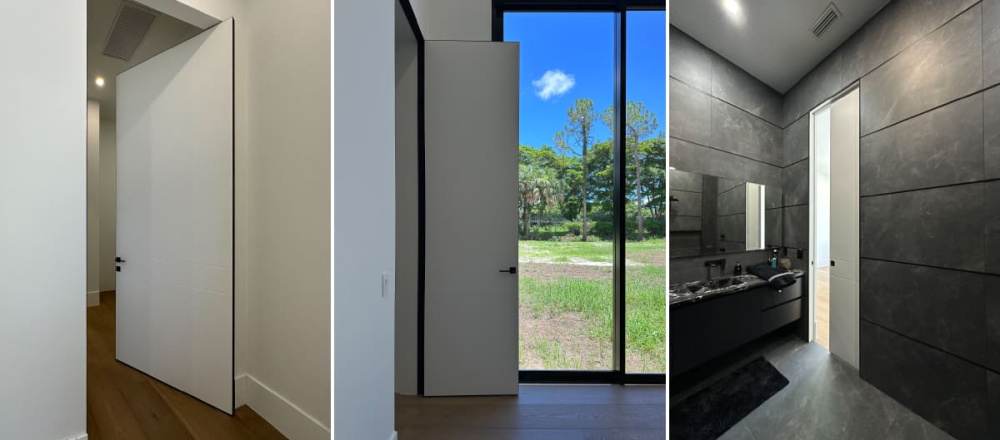
Interior door styles have a strong influence on the visual character of a home. They can either support the design language or become a standout feature.
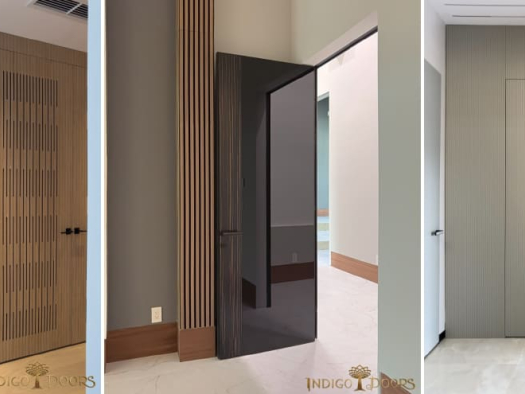
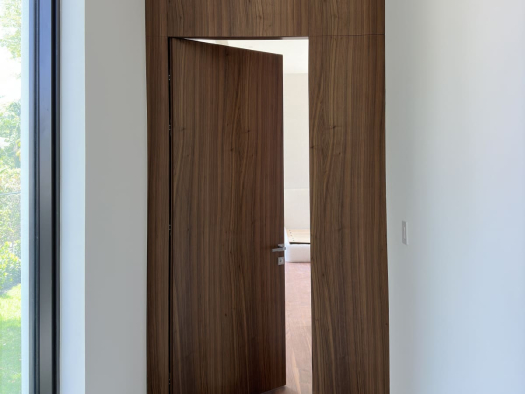
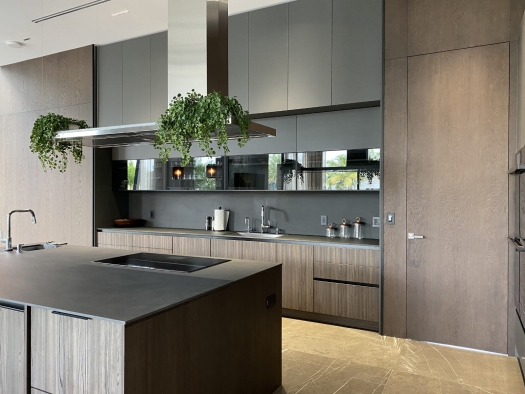
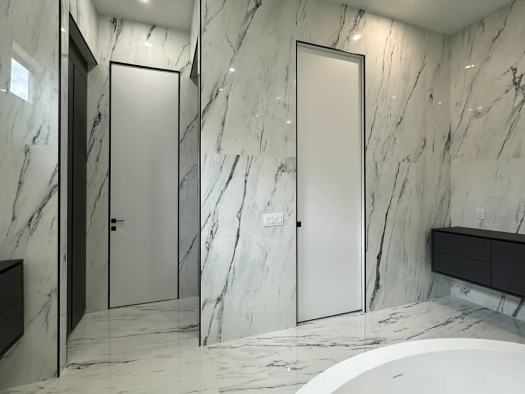
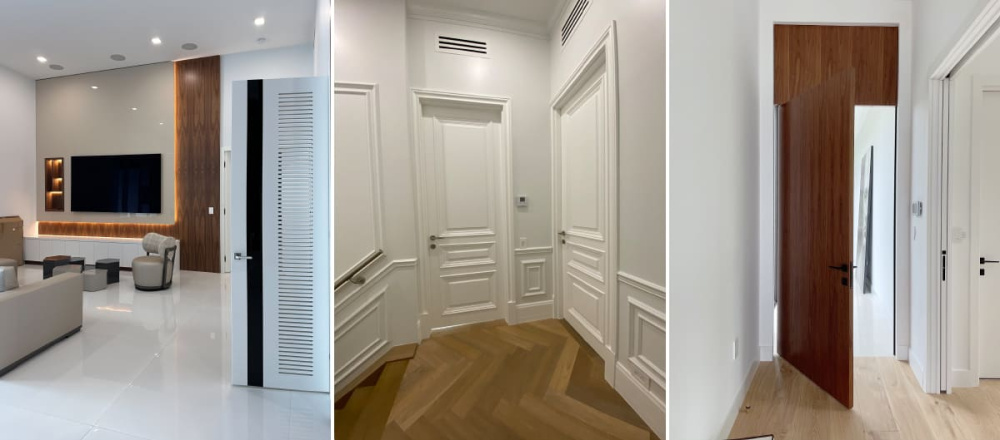
Modern interior doors with clean lines and smooth finishes create a minimalist look. Frameless doors go even further by blending into the wall, creating a seamless appearance. On the other hand, classic paneled doors introduce texture and detail.
Glass doors add another dimension by allowing light to pass through and visually connecting spaces. This can make rooms feel larger and more integrated, especially in homes with limited natural light.
Key visual effects created by door styles include:
- enhancing minimalism with flush surfaces
- adding elegance with panel designs
- increasing brightness with glass elements
- creating contrast with bold finishes
The visual role of doors should always align with the overall interior concept.
How Interior Doors Affect Light and Openness
Light is one of the most important elements in interior design, and doors play a significant role in how it is distributed. Solid doors block light completely, while glass or partially glazed doors allow it to flow between rooms.
In modern homes, maximizing natural light is often a priority. Glass interior doors or doors with inserts can help achieve this by connecting spaces visually without removing separation.
This is especially important in:
- hallways with limited natural light
- home offices that need brightness
- living areas connected to interior rooms
“The right door can turn a dark corridor into a bright and inviting space.”
By choosing doors that support light flow, homeowners can improve both comfort and aesthetics.
Choosing Door Styles Based on Room Function
Each room in a home has different functional requirements, and door styles should reflect these needs. A one-size-fits-all approach rarely delivers the best results.
Bedrooms typically require privacy and sound control, making solid-core doors a better choice. Living areas benefit from openness and light, where glass or modern doors work well. Storage areas may prioritize accessibility, making bi-fold or sliding doors more practical.
When selecting door styles, consider:
- the level of privacy needed
- the frequency of use
- the available space
- the desired visual effect
Matching the door type to the room’s function ensures both practicality and design consistency.
Modern vs Classic Interior Door Styles
Modern and classic door styles each offer distinct advantages. Understanding their differences helps in creating a cohesive interior.
Modern doors focus on simplicity, clean lines, and minimal detailing. They are often used in contemporary homes where the emphasis is on openness and clarity. Classic doors, on the other hand, feature panels, moldings, and decorative elements that add richness and tradition.
Both styles can work well, depending on the overall design direction. In some cases, a combination of modern and classic elements can create a balanced and unique interior.
Key differences between modern and classic styles include:
- modern doors emphasize simplicity
- classic doors highlight detail and texture
- modern designs create openness
- classic styles add structure and character
Choosing between them depends on the desired atmosphere of the home.
The Role of Materials in Door Design and Performance
Material selection affects not only the appearance of a door but also its durability and performance. In environments with specific conditions, such as humid climates, this becomes even more important.
Engineered wood and MDF are commonly used in modern interiors due to their stability and resistance to warping. Veneer finishes provide a natural look while maintaining durability. Glass adds light and openness but requires careful consideration for privacy.
The right material ensures that the door maintains its appearance and function over time.
“A well-chosen material is the foundation of a door that performs as well as it looks.”
Durability and aesthetics should always go hand in hand.
How Interior Doors Influence Flow and Movement
Interior doors play a key role in how people move through a space. Their placement, opening direction, and style can either support or disrupt the natural flow of the home.
Swing doors can create obstacles in tight areas, while sliding or pocket doors allow for smoother transitions. Wide openings with pivot or double doors can create a sense of grandeur and openness.
The way doors operate also affects how spaces connect and interact with each other. Thoughtful planning ensures that movement feels intuitive and unobstructed.
Key considerations for improving flow include:
- minimizing obstruction in high-traffic areas
- aligning door placement with movement patterns
- choosing appropriate opening mechanisms
- maintaining consistency throughout the home
These factors contribute to a more comfortable and functional living environment.
Conclusion How Interior Door Styles Affect Home Design and Space
Interior door styles have a significant impact on both the design and functionality of a home. They influence how space is used, how light flows, and how rooms connect with each other.
By carefully selecting the right door types, materials, and styles, homeowners can create interiors that are both visually appealing and highly practical.
Interior doors are not just functional components — they are a key element of modern home design that shapes the overall experience of living space.