
- Understanding Flush and Panel Interior Door Styles
- What Defines Flush Interior Doors in Modern Design
- Panel Interior Doors and Their Architectural Presence
- Visual Differences Between Flush and Panel Interior Doors
- Flush vs Panel Interior Doors in Contemporary American Homes
- How Interior Door Styles Influence Space and Light
- Interior Door Styles and Long Term Design Relevance
- Choosing Flush or Panel Interior Doors Based on Interior Style
- Flush and Panel Interior Doors as Part of a Cohesive Design Strategy
- Interior Door Styles Offered by Indigo Doors
Understanding Flush and Panel Interior Door Styles
Flush and panel interior doors are two of the most widely used interior door styles in American homes. While both serve the same functional purpose, their visual impact, architectural role, and suitability for different interiors vary significantly. In 2026, homeowners increasingly compare these styles not only from a practical standpoint but also as part of a broader interior design strategy.
Flush interior doors are defined by their smooth, flat surface and minimalist appearance. Panel interior doors, by contrast, feature recessed or raised sections that add depth and visual structure. These fundamental differences influence how each style interacts with light, space, and surrounding architectural elements.
Understanding the distinction between flush and panel interior doors helps homeowners make informed decisions that align with their design goals. Rather than choosing based on habit, modern buyers consider how each style contributes to the overall interior composition.
Interior door styles are no longer interchangeable elements — they are deliberate design choices.
What Defines Flush Interior Doors in Modern Design
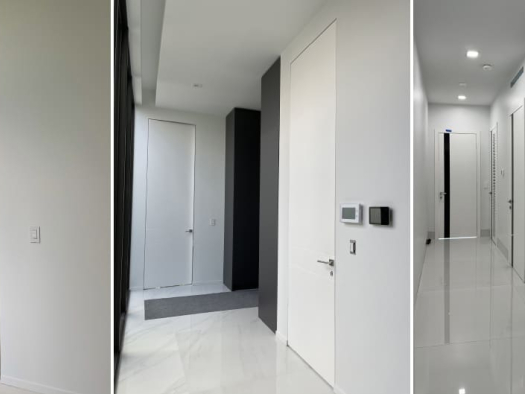
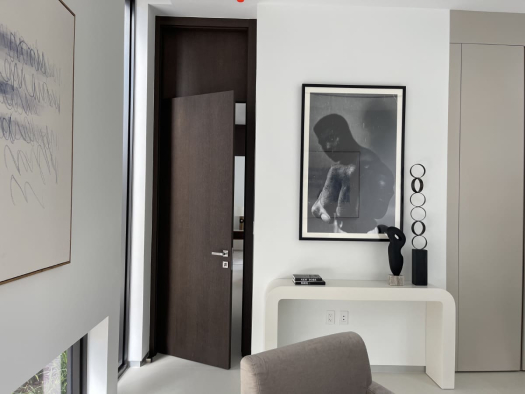
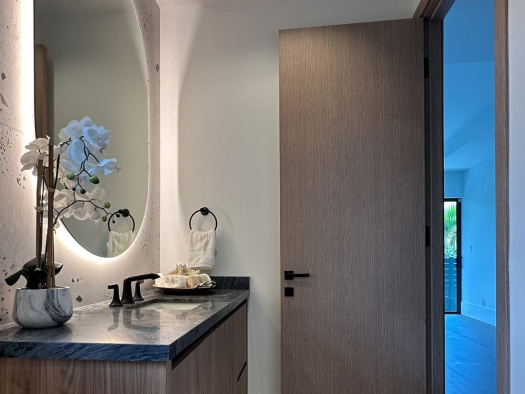
Flush interior doors are characterized by a clean, uninterrupted surface with no decorative panels or moldings. This simplicity makes them a cornerstone of modern and minimalist interiors, where visual clarity and restraint are highly valued.
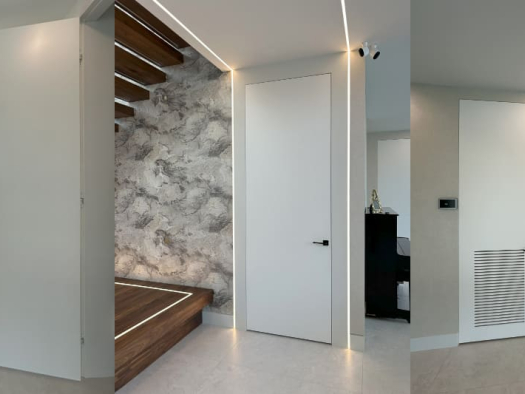
In American homes, flush doors are often chosen to support open layouts and contemporary architecture. Their understated design allows walls, lighting, and furniture to take center stage without visual interference. This makes flush interior doors particularly effective in spaces that rely on cohesion and spatial flow.
Flush interior doors also align well with current architectural trends that favor seamless transitions and reduced visual noise. When paired with matching wall finishes, these doors can appear almost invisible, enhancing the sense of openness within a home.
Key characteristics of flush interior doors include:
- Smooth, flat door surfaces
- Minimal visual detailing
- Strong compatibility with modern interiors
- Emphasis on proportion and alignment rather than ornamentation
In 2026, flush interior door styles continue to appeal to homeowners seeking refined simplicity and long-term design relevance.
Panel Interior Doors and Their Architectural Presence
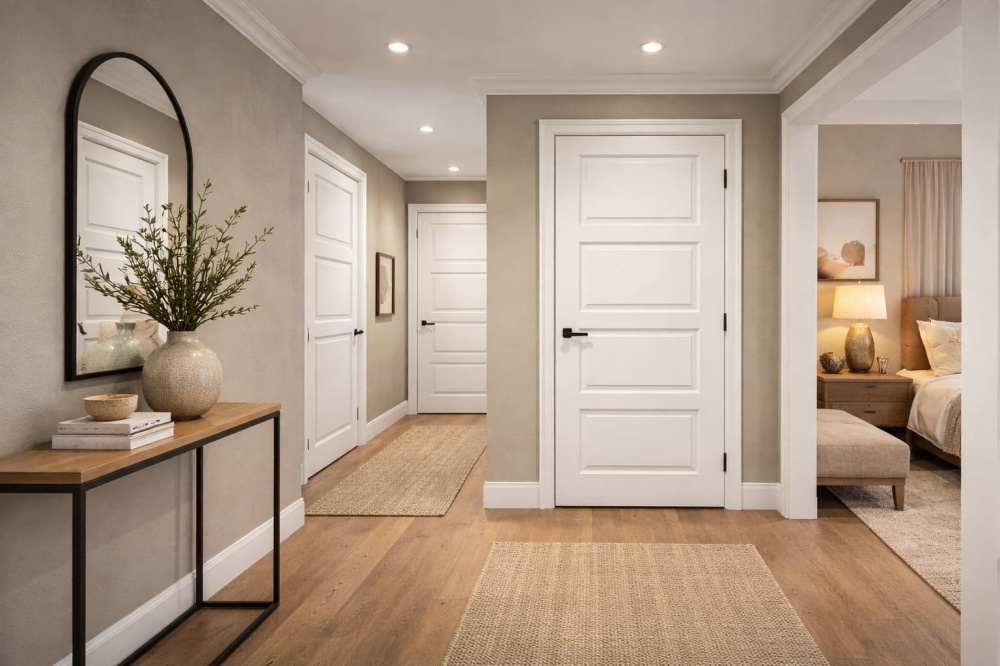
Panel interior doors introduce depth and structure through framed sections that create visual rhythm. These panels can vary in number, size, and proportion, giving panel doors a wide range of stylistic expressions.
In American homes, panel interior doors are often associated with classic, transitional, and traditional interiors. However, modern interpretations of panel doors have expanded their appeal, allowing them to integrate seamlessly into contemporary spaces as well.
Panel doors add character and definition to interiors. Their dimensional design creates shadows and texture, which can enrich a space visually. This makes them particularly suitable for homes where architectural detail plays a central role.
Panel interior doors are commonly selected for:
- Homes with traditional or transitional architecture
- Interiors that benefit from visual depth
- Spaces where doors act as design accents
- Long-term design consistency across rooms
Panel door styles remain relevant in 2026 because they offer flexibility between tradition and modern refinement.
Visual Differences Between Flush and Panel Interior Doors
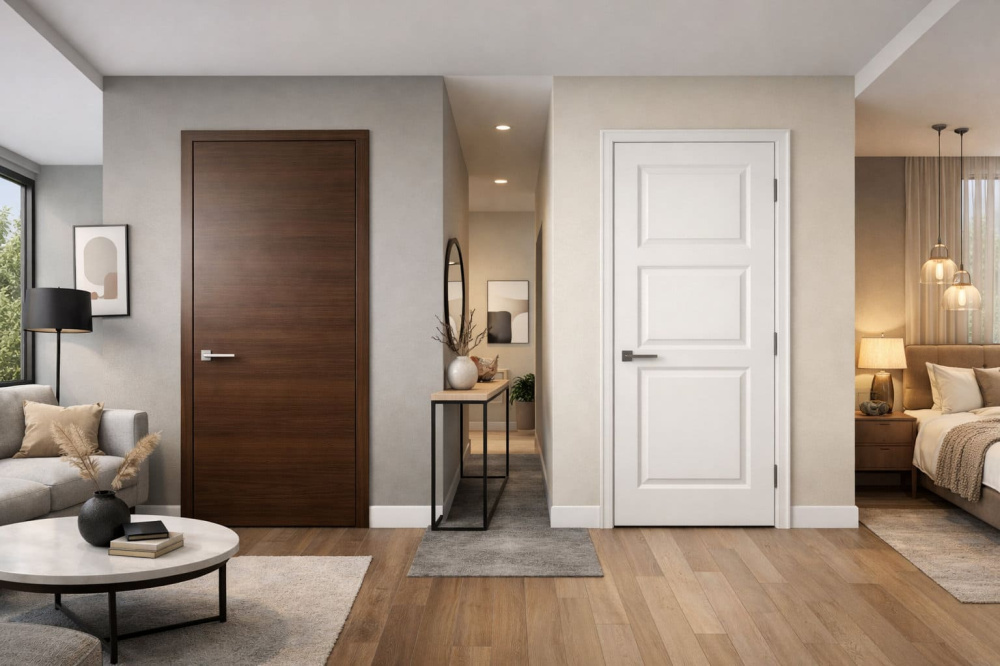
The most noticeable contrast between flush and panel interior doors lies in their visual impact. Flush doors emphasize smoothness and continuity, while panel doors introduce form and articulation.
In bright, modern interiors, flush doors tend to recede into the background, allowing spaces to feel larger and more unified. Panel doors, on the other hand, draw attention through their structured design, making them more visually expressive.
This difference becomes especially important in open floor plans. Flush interior doors support uninterrupted sightlines, whereas panel doors can serve as visual anchors that define zones within a home.
“The visual language of interior doors sets the tone for how a space is perceived.”
Choosing between flush and panel styles ultimately depends on whether the goal is subtle integration or architectural emphasis.
Flush vs Panel Interior Doors in Contemporary American Homes
In contemporary American homes, both flush and panel interior doors coexist, each serving different design objectives. Flush doors are often favored in urban residences, modern apartments, and minimalist houses. Panel doors remain popular in suburban homes and properties with classical architectural elements.
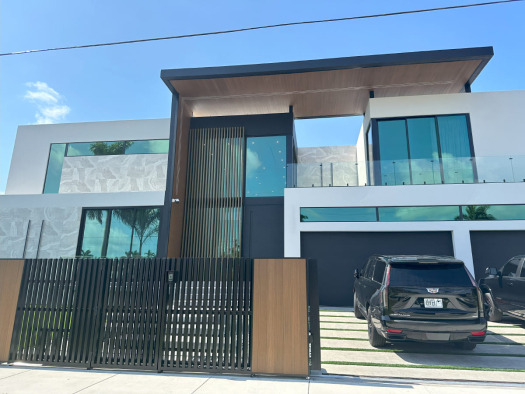
Florida-based homes, in particular, often lean toward flush interior door styles due to their compatibility with light-filled interiors and modern aesthetics. Panel doors are still widely used where warmth and traditional character are desired.
Rather than following a single trend, homeowners in 2026 increasingly mix styles strategically. Flush doors may be used in shared living areas, while panel doors appear in bedrooms or private spaces.
This balanced approach allows homeowners to:
- Maintain visual harmony
- Adapt door styles to room function
- Preserve architectural coherence
- Enhance long-term design value
How Interior Door Styles Influence Space and Light
Interior door styles play a subtle but important role in how light moves through a home. Flush doors reflect light evenly across their surface, supporting bright and open interiors. Panel doors interact with light differently, creating highlights and shadows that add depth.
In spaces with limited natural light, flush interior doors can help maintain brightness by minimizing visual interruptions. Panel doors, while visually richer, may slightly reduce light reflection depending on their design and finish.
Homeowners increasingly consider these effects when selecting door styles. The goal is to ensure that doors enhance rather than disrupt the desired atmosphere of each space.
Light, space, and surface design are inseparable elements in modern interiors.
Interior Door Styles and Long Term Design Relevance
When comparing flush vs panel interior doors, long-term relevance is a key consideration. Flush doors are often viewed as timeless due to their simplicity and adaptability. Panel doors, while more expressive, also maintain longevity when designed with balanced proportions.
In 2026, American homeowners prioritize interior door styles that will remain visually appropriate as trends evolve. This often leads to a preference for understated designs that can adapt to future interior updates.
Both flush and panel interior doors can offer lasting value when chosen thoughtfully. The decision depends on architectural context rather than trend-driven appeal.
Choosing Flush or Panel Interior Doors Based on Interior Style
Interior style plays a decisive role in selecting between flush and panel doors. Modern, minimalist, and contemporary interiors typically favor flush designs. Classic, transitional, and expressive interiors often benefit from panel doors.
When choosing interior door styles, homeowners commonly evaluate:
- Overall architectural theme
- Desired visual impact
- Room function and privacy needs
- Consistency across the home
This approach ensures that door selection supports rather than contradicts the interior design vision.
Flush and Panel Interior Doors as Part of a Cohesive Design Strategy
In 2026, interior doors are rarely chosen in isolation. Flush and panel interior doors are considered components of a cohesive design strategy that includes walls, flooring, lighting, and furniture.
A well-designed home may incorporate both styles intentionally, using flush doors to maintain openness and panel doors to introduce character where appropriate. This layered approach reflects a more mature understanding of interior design.
“The best interiors are not defined by one style, but by thoughtful balance.”
Interior Door Styles Offered by Indigo Doors
Flush and panel interior door styles are central to the design philosophy of Indigo Doors. Through modern collections, classic designs, refined royal aesthetics, and frameless solutions, the brand offers door styles that align with contemporary American interiors.
Based in Florida and serving customers across the United States, Indigo Doors focuses on architectural precision, visual balance, and long-term relevance. Each interior door style is developed to integrate seamlessly into modern homes while supporting diverse design preferences.
In the comparison between flush vs panel interior doors, the right choice ultimately depends on the home’s architectural language. With a curated selection of interior door styles, Indigo Doors supports homeowners in making confident, design-driven decisions that enhance everyday living.