
- Why interior doors matter in Ohio renovations
- Flush doors for contemporary and minimalist homes
- Slim Shaker doors for timeless renovations
- Craftsman doors for character homes
- Modern farmhouse doors for Ohio homes
- Glass doors for light and flexible spaces
- Pocket doors and sliding doors for compact rooms
- Door styles by Ohio home type
- Materials that perform well in Ohio conditions
- Color and hardware choices for modern Ohio interiors
- Matching door style to each room
- Common mistakes in Ohio door renovations
- Expert recommendation for Ohio homeowners
- Final thoughts on modern interior door styles in Ohio
Modern interior doors can change the way an Ohio home feels more than many homeowners expect. A door affects privacy, sound control, light flow, room transitions, hallway rhythm and the relationship between old architecture and new finishes. In a renovation, it is not just a product choice. It is part of the home’s architectural editing.
Ohio homes are especially interesting because the state has a broad mix of housing types. A renovation in Cleveland may involve a Craftsman bungalow, Colonial Revival home, early 20th-century house or postwar ranch. A Columbus or Cincinnati renovation may include a suburban split-level, a newer open-plan home, a farmhouse-inspired build or a compact urban house. Heritage Home Program notes that Craftsman homes were popular from 1905 to 1950, often featuring natural wood, fireplaces and built-in storage, while Minimal Traditional homes and later ranch houses became important parts of the mid-century housing landscape.
Climate also matters. Ohio’s annual precipitation varies by region, from about 32 inches in the northwest to about 42 inches in the south, and snowfall varies significantly between the Lake Erie region and southern Ohio. The state has also seen wetter multiyear periods since 2000 and more extreme precipitation events since the mid-1990s. For interior doors, this does not mean homeowners need outdoor-grade materials inside. It means they should think carefully about humidity, basements, seasonal movement and material stability.
From an expert perspective, the best modern interior door styles for Ohio home renovations are not the most dramatic styles. They are the styles that modernize the home without fighting its age, layout or climate. A flush door may be perfect in a contemporary renovation, but too flat for a Craftsman interior. A Shaker door may be timeless in a farmhouse or Colonial-inspired home, but too familiar for a sleek new build. The right choice depends on architecture first, trend second.
Why interior doors matter in Ohio renovations
Interior doors often get selected late in the renovation process, after flooring, cabinets, paint and hardware. That is a mistake. Doors are used every day, seen from multiple rooms and repeated throughout the house. If they feel cheap, mismatched or poorly proportioned, the entire renovation can feel less polished.
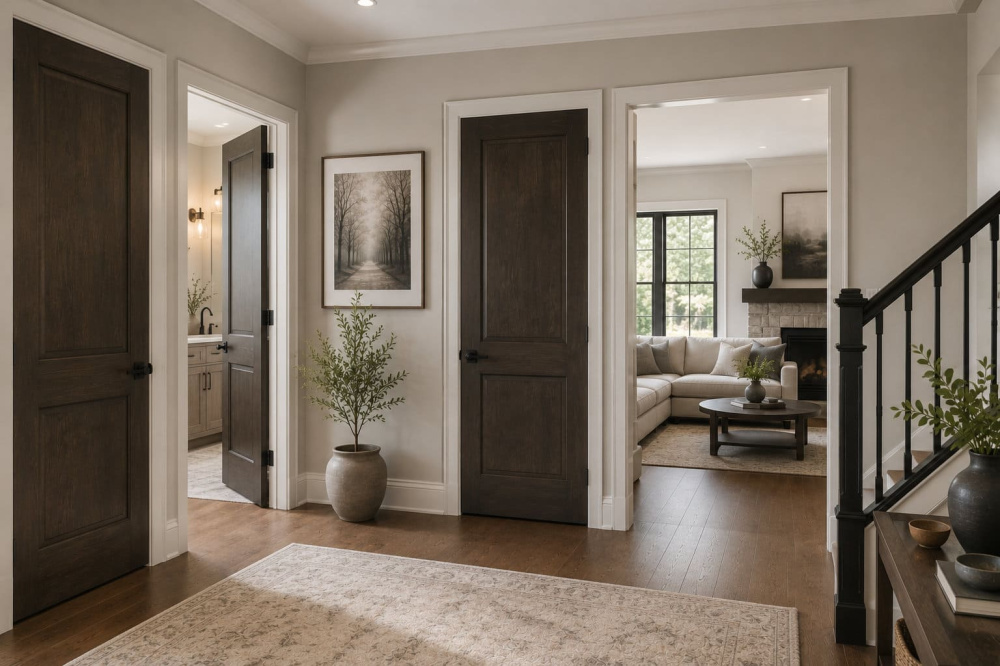
In Ohio, many renovations involve older homes with existing trim, uneven openings, original casing, older plaster, basement moisture issues or additions from different decades. A homeowner may be renovating a 1920s bungalow, a 1950s ranch or a 1990s suburban home, and each one needs a different door strategy. The best door package should respect the original structure while making the interior feel current.
A modern door can solve practical problems too. Solid-core doors can improve privacy in bedrooms and home offices. Glass doors can bring light into dark hallways. Pocket doors can help tight bathrooms or laundry spaces function better. Flush doors can calm a visually busy hallway. Slim Shaker doors can update older interiors without erasing character.
A successful Ohio door renovation should not make every room look new in the same way. It should make the home feel more intentional, more comfortable and more consistent.
That is why door selection should happen early. The decision affects framing, casing, hardware, paint, flooring transitions and sometimes wall modifications. Waiting too long often forces homeowners into basic stock options instead of choosing doors that truly fit the renovation.
Flush doors for contemporary and minimalist homes
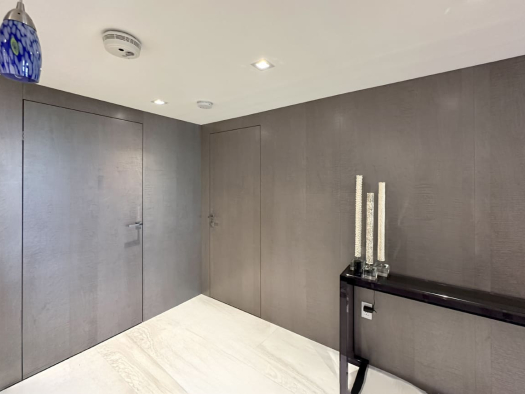
Flush doors are one of the strongest modern choices for Ohio homes with clean interiors. They have a flat surface, no panel detail and a simple architectural presence. In contemporary homes, modern condos, updated ranch houses and minimalist renovations, they can make walls feel calmer and rooms feel more refined.
The key is quality. A cheap hollow-core flush door can look thin and builder-grade. A solid-core flush door with precise edges, good hinges and better hardware can look sophisticated. In modern design, simplicity exposes every detail. If the slab is poorly finished or the frame is out of square, the door will not look minimal. It will look unfinished.
Flush doors work especially well in long ranch-style hallways, lower-level renovations, modern bedrooms and home offices. They can also be painted the same color as the wall for a quieter look. In a smaller Ohio home, this can reduce visual interruption and make the floor plan feel larger.
However, flush doors are not ideal everywhere. In a Craftsman bungalow or Colonial Revival interior with original trim, a fully flat slab may feel too stark. In those homes, a slim Shaker or flat-panel door usually creates a better bridge between traditional architecture and modern taste.
Slim Shaker doors for timeless renovations
Slim Shaker doors are arguably the most versatile interior door style for Ohio renovations. They are clean enough for modern interiors and familiar enough for older homes. The profile is simple, but it still gives the wall depth, shadow and proportion. This makes it especially useful in homes that are being updated without being stripped of their architectural character.
A slim Shaker door can work in a renovated farmhouse, a suburban Colonial, a Craftsman-inspired home, a ranch renovation or a transitional interior. It also adapts well to different colors. White feels classic. Warm gray feels soft. Deep green or charcoal can make a study or bedroom feel richer. Natural wood adds warmth in homes with white walls and simple flooring.
Houzz’s 2026 trend reporting points to a renewed appreciation for traditional details, detailed millwork, paneling, earthy colors, warm woods, olive green, taupe, deep brown, muted blue and burgundy. Slim Shaker doors fit this direction well because they offer structure without heavy ornament.
For Ohio homeowners who want a safe but not boring upgrade, slim Shaker is often my first recommendation. It does not feel overly trendy, and it has enough design flexibility to survive future paint, flooring and furniture changes.
Craftsman doors for character homes
Craftsman homes and bungalows are part of Ohio’s architectural fabric, especially in older neighborhoods. Heritage Home Program describes Craftsman homes as emphasizing natural materials, handicraft, simplicity and functionality, with interiors often featuring natural wood, fireplaces and built-ins. A modern renovation in this kind of home should not ignore that language.
For Craftsman interiors, the best door styles are usually three-panel, flat-panel Shaker, five-panel or simple wood doors with visible construction. The door should look like part of the house, not a product pasted over it. Square proportions, warm wood tones and understated hardware usually work better than ultra-minimal slabs or glossy modern finishes.
A stained wood Craftsman door can be beautiful when the home still has original trim. If the trim has already been painted, a warm white or muted earth-tone door may be more practical. The goal is not to recreate a museum interior. It is to keep the warmth and honesty of the style while making the home suitable for modern living.
In a Craftsman renovation, modern does not have to mean flat. The better move is usually cleaner craftsmanship, better proportions and more disciplined material choices.
Hardware should also feel grounded. Aged brass, oil-rubbed bronze, dark bronze or satin nickel can work, depending on the rest of the interior. Very sharp matte black hardware can work in some updated Craftsman homes, but it should be used with restraint.
Modern farmhouse doors for Ohio homes
Modern farmhouse style remains common in Ohio renovations, especially in suburban, rural and newer-build homes. The best version of this style is warm, simple and durable. The weakest version relies too heavily on barn doors, high contrast black-and-white palettes and decorative details that may date quickly.
For a modern farmhouse renovation, I recommend simple two-panel doors, five-panel doors, slim Shaker doors and plank-inspired doors used carefully. These styles feel relaxed without looking unfinished. Painted finishes in warm white, ivory, greige, muted green or soft taupe tend to work better than cold white.
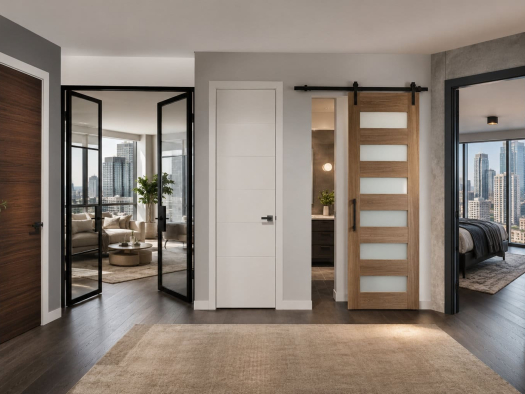
Barn doors should be used selectively. They can look appropriate for a pantry, mudroom, laundry room or casual basement space. They are less effective for bedrooms, bathrooms and home offices because they usually do not seal well enough for privacy or sound control. Contractors and design professionals are increasingly cautious about overly trend-driven renovation choices, with recent renovation coverage emphasizing timeless materials, warm woods and lifestyle-driven layouts over short-lived looks.
My expert recommendation is to treat farmhouse as a mood, not a formula. A warm Shaker door with good hardware will usually age better than an oversized sliding barn door used only for effect.
Glass doors for light and flexible spaces
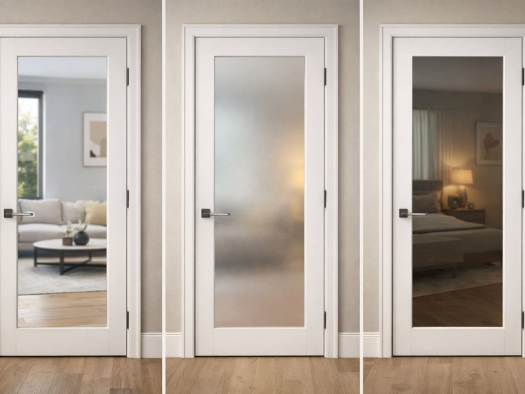
Glass interior doors are useful in Ohio renovations because many older homes have dark hallways, enclosed dining rooms, small offices or interior rooms that need borrowed light. A glass door can divide space without making it feel closed off. This is especially useful in homes where the renovation goal is openness, but full open concept living is not practical.
Clear glass works best for dining rooms, sitting rooms and spaces where visual connection is welcome. Frosted glass is better for home offices, dressing areas and rooms that need privacy. Fluted or reeded glass adds texture and obscures views while still letting light move through. This makes it one of the most attractive modern choices for transitional renovations.
Glass doors also work well in hybrid layouts. Many homeowners now want open spaces that can still be separated when needed. A home office off a living room, for example, may need light during the day and privacy during video calls. A frosted or fluted glass door can be a smart compromise.
The caution is acoustic privacy. Glass doors usually do not perform like solid-core bedroom doors. For a bedroom, music room or serious work-from-home office, a solid-core door may be the better choice. Glass should be selected for light and visual flow, not as a universal privacy solution.
Pocket doors and sliding doors for compact rooms
Pocket doors can be extremely useful in Ohio renovations, especially in older homes where bathrooms, closets and laundry areas are tight. A standard hinged door needs swing clearance. In a small bathroom, that swing can interfere with the vanity, toilet, tub or hallway. A pocket door can reclaim that space.
Pocket doors are also useful in finished basements, mudrooms, pantries and home offices. They allow rooms to feel open most of the time while still giving homeowners the option to close them. In a renovation, however, pocket doors must be planned early because the wall cavity matters. Plumbing, wiring, studs and structural elements can limit what is possible.
Sliding doors that sit on the wall surface are easier to install, but they are not always better. A surface-mounted sliding door needs wall space to slide across. It may also provide weaker sound separation. In a modern Ohio renovation, a clean pocket door is usually more refined than rustic exposed track hardware.
For older homes, pocket doors can also feel historically appropriate. Many early homes used large interior sliding or pocket doors between formal rooms. A modern version can bring back that flexibility without making the interior feel old-fashioned.
Door styles by Ohio home type
The best interior door style depends heavily on the home itself. Ohio has historic neighborhoods, postwar suburbs, rural properties, lake-area homes and newer planned communities. A door that looks perfect in a Columbus new build may look wrong in a Cleveland Heights bungalow or a Cincinnati Tudor-inspired home.
| Ohio home type | Best modern door styles | Recommended finishes | Expert note |
|---|---|---|---|
| Craftsman bungalow | Three-panel, five-panel, flat-panel Shaker | Stained wood, warm white, olive, bronze hardware | Preserve depth, wood character and proportion |
| Colonial Revival home | Slim Shaker, raised panel, refined French doors | White, cream, muted blue, brass or nickel hardware | Keep the symmetry and classic trim language |
| Ranch renovation | Flush, single-panel, slim Shaker, glass office doors | Warm white, walnut, charcoal, greige | Use doors to modernize long hallways |
| Modern farmhouse | Two-panel, five-panel, slim Shaker, selective barn door | Ivory, greige, muted green, natural oak | Avoid making every door look trend-driven |
| Split-level home | Flush, Shaker, pocket doors, frosted glass | Soft white, pale gray, oak veneer | Improve flow between compact zones |
| Contemporary new build | Flush, frameless, tall slab, concealed hinge | Walnut, white oak, black, warm white | Hardware quality makes or breaks the look |
| Lake-area home | Glass, Shaker, louvered where appropriate, wood veneer | White oak, soft blue, sand, warm white | Balance light, privacy and moisture awareness |
| Finished basement | Solid-core flush, moisture-conscious composite, pocket doors | White, gray, wood-look finishes | Consider humidity and ventilation first |
The table is not a strict rulebook. Many Ohio homes blend styles. A ranch may be renovated with modern farmhouse details. A Colonial may have contemporary interiors. A Craftsman may include a modern kitchen addition. The door package should connect these layers rather than ignore them.
Materials that perform well in Ohio conditions
Ohio’s seasonal conditions make material selection important. Summer humidity, winter heating, basements and moisture-prone lower levels can all affect interior materials. Wood responds to humidity changes by absorbing and releasing moisture, which can lead to swelling and shrinking over time. Purdue Extension explains that wood changes moisture content in response to daily and seasonal relative humidity, swelling when air is humid and shrinking when air is dry.
This does not mean wood doors are a bad choice. It means construction, finishing and installation matter. Solid-core engineered doors often provide a good balance of stability, weight and sound control. MDF doors can be excellent for painted interiors when properly manufactured and finished. Wood veneer doors give the warmth of natural wood with more stable core construction.
Solid wood doors are beautiful, especially in Craftsman, traditional and high-end renovations, but they need proper acclimation and finishing. The top and bottom edges should not be ignored. A door that is sealed only on the faces is more vulnerable to moisture movement.
EPA guidance recommends keeping indoor humidity below 60 percent where possible, ideally between 30 and 50 percent, and acting quickly when condensation or moisture appears on windows, walls or pipes. For Ohio homeowners, this is especially relevant in bathrooms, laundry rooms, finished basements and older homes with limited ventilation.
Color and hardware choices for modern Ohio interiors
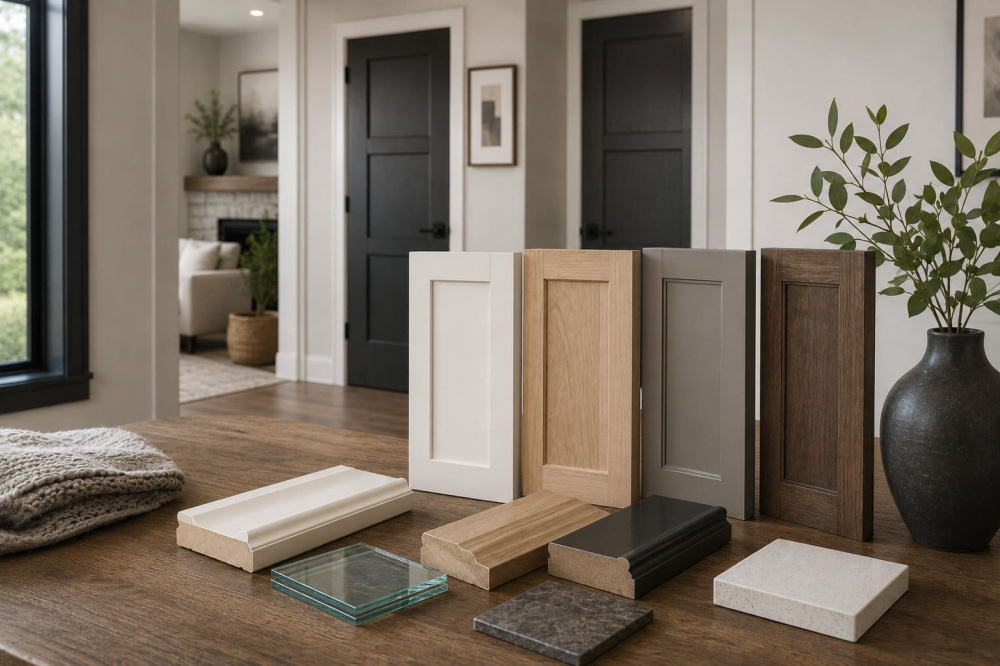
Color is one of the easiest ways to modernize interior doors without choosing an unusual profile. In Ohio renovations, warm whites, soft grays, greige, taupe, olive, charcoal, muted blue and natural wood finishes all work well. Cold white and flat gray can feel dated if they are used without warmth elsewhere in the room.
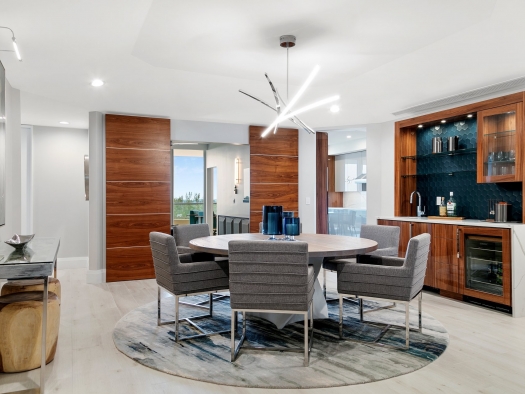
Warm wood is especially important in current renovation design. Houzz reports strong interest in warm and medium wood tones, including walnut, elm, hickory, cherry and white oak, as well as warmer earthy palettes. This applies directly to doors. A white oak veneer flush door can make a contemporary renovation feel warmer. A walnut door can add depth to a hallway, office or primary suite.
Hardware should be chosen by both style and use. Matte black still works in some modern and farmhouse interiors, but it is no longer the automatic choice. Satin brass, aged brass, dark bronze, satin nickel and blackened bronze often feel more enduring. In older homes, hardware with a little warmth usually works better than sharp, high-contrast finishes.
A simple rule helps: if the door has more detail, the hardware can be quieter. If the door is very plain, the hardware can carry more design weight. A flush door with a refined lever can feel architectural. A paneled door with overly bold hardware can feel busy.
Matching door style to each room
Different rooms need different door solutions. A mistake many homeowners make is choosing one door style for the whole house without considering room function. Consistency matters, but function matters more.
Use this room-by-room approach:
-
Bedrooms should usually get solid-core doors for privacy, weight and better sound control.
-
Bathrooms need well-finished doors, stable materials and good ventilation.
-
Home offices work best with solid-core doors for sound or frosted glass doors for light.
-
Pantries can use Shaker, glass-lite, pocket or sliding doors depending on kitchen layout.
-
Laundry rooms benefit from stable painted doors, pocket doors or ventilation-conscious options.
-
Dining rooms can use glass French doors, slim Shaker double doors or refined panel doors.
-
Finished basements should prioritize moisture-aware materials and solid construction.
This does not mean every room needs a different style. A home can use one main door family and vary the details. For example, a renovation might use slim Shaker solid doors for bedrooms, frosted glass Shaker doors for the office and a pocket door for the powder room. The result feels coordinated but not repetitive.
The best door package is not identical everywhere. It is consistent where the eye needs order and specific where the room needs function.
This is especially important in Ohio homes with additions. A house may have an older front section and a newer rear kitchen or family room. Door choices can help those spaces feel connected without pretending they were built at the same time.
Common mistakes in Ohio door renovations
The most common mistake is choosing a door only from a photo. Online product images rarely show how the door feels in a real hallway, beside existing trim or under Ohio seasonal conditions. A door that looks sleek in a showroom may feel too thin in a 1920s home. A heavy traditional door may look outdated in a modern ranch renovation.
Another mistake is ignoring the existing casing. If the trim stays, the door must work with it. A frameless slab inside traditional casing usually looks confused. A slim panel door inside clean modern casing can look excellent. Door and casing should be treated as a system.
Homeowners also underestimate the value of solid-core construction. Hollow-core doors can be acceptable for low-priority closets, but they often disappoint in bedrooms, offices and bathrooms. They feel lighter, transmit more sound and reduce the sense of quality in a renovation.
The final mistake is using barn doors as a universal solution. They can be useful and attractive in the right place, but they do not provide the same privacy as hinged doors. In Ohio renovations, they are best used sparingly in pantries, mudrooms, laundry rooms and casual spaces.
Expert recommendation for Ohio homeowners
For most Ohio renovations, I would start with a solid-core slim Shaker door as the baseline. It works across a wide range of homes, from older bungalows and Colonial-inspired houses to updated ranches and transitional interiors. It looks current without being aggressively trendy, and it supports both painted and wood finishes.
For contemporary renovations, I would shift toward flush doors, taller slabs, concealed hinges and wood veneer. These choices work especially well in newer homes or fully redesigned interiors where the casing, baseboards and walls are also clean. The simpler the door, the more important the installation quality becomes.
For Craftsman, bungalow and historic homes, I would avoid over-minimalizing. Choose doors with panel depth, warm finishes and hardware that relates to the original architecture. Modernization should make these homes feel refreshed, not stripped.
For finished basements, bathrooms and laundry rooms, I would prioritize stable materials and moisture control. Ohio’s climate and older housing stock make this practical. A beautiful door that swells, sticks or warps is not a successful renovation choice.
Final thoughts on modern interior door styles in Ohio
Best Modern Interior Door Styles for Ohio Home Renovations should be selected through the combined lens of architecture, climate, function and long-term design value. Ohio homes are too varied for one universal answer. A Craftsman bungalow, ranch house, farmhouse, Colonial Revival home, split-level and contemporary new build each need a different door strategy.
The most reliable styles are flush doors for contemporary spaces, slim Shaker doors for transitional renovations, Craftsman panel doors for character homes, selective glass doors for light flow and pocket doors for tight spaces. These options cover most renovation needs without leaning too hard on short-lived trends.
The strongest renovations do not treat doors as afterthoughts. They use doors to refine the home’s rhythm. They improve privacy, brighten dark spaces, support work-from-home needs and make hallways feel more intentional. They also respect the Ohio realities of seasonal humidity, older construction and mixed architectural styles.
A good modern interior door should feel natural in the home the day it is installed and still feel appropriate years later. That is the real test of a successful renovation.