
- Best Interior Doors for Open Concept Homes That Enhance Flow and Function
- Understanding open concept living and door functionality
- Why traditional swing doors limit open layouts
- Sliding interior doors for flexible zoning
- Modern interior doors for seamless integration
- Frameless doors for invisible transitions
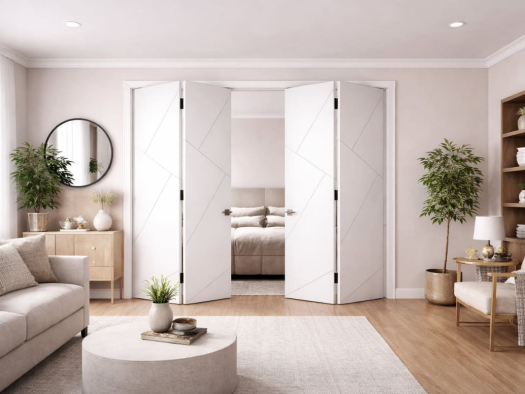
- Space saving door types for efficient layouts
- Statement doors as focal design elements
- How to choose the best interior doors for your home
- Conclusion best interior doors for open concept homes
Best Interior Doors for Open Concept Homes That Enhance Flow and Function
Open-concept homes have become one of the most popular architectural trends across the United States. By removing walls and combining living areas, homeowners achieve a more spacious, bright, and modern environment. However, this openness creates a new challenge—how to maintain flexibility, privacy, and functionality without breaking the visual flow.
Interior doors in open layouts are no longer just functional elements. They act as adaptive design tools that allow spaces to transform depending on daily needs. A well-chosen door can create separation when required while remaining almost invisible when not in use.
At the same time, these doors must align with the overall design concept. They should enhance the openness rather than interrupt it. This is why selecting the right interior door style is essential for both aesthetics and practicality.
In open concept interiors doors are not barriers they are strategic elements that shape how space is used
Understanding open concept living and door functionality
Open-concept living combines multiple functional zones such as kitchens, dining areas, and living rooms into one continuous space. This layout improves natural light distribution and creates a more social and inviting environment.
However, completely open spaces are not always practical. There are moments when separation is necessary—for example, when working from home, reducing noise, or creating privacy for guests. Interior doors help solve this issue without compromising the overall design.
For doors to work effectively in open layouts, they must:
-
maintain visual continuity across the space
-
allow natural light to pass through or around them
-
provide flexibility without permanent division
When these conditions are met, doors become an asset rather than a limitation in open-concept design.
Why traditional swing doors limit open layouts
Traditional swing doors were designed for closed-room layouts, not for modern open spaces. In open-concept homes, they often feel restrictive and inefficient.
One of the biggest drawbacks is the need for clearance space. Swing doors require room to open, which limits furniture placement and disrupts the layout. In large open areas, this can break the natural flow of movement.
Additionally, standard doors tend to block sightlines and reduce the sense of openness. Even when closed temporarily, they create a visual barrier that contradicts the purpose of an open layout.
Key limitations include:
-
taking up valuable floor space
-
interrupting light flow between areas
-
reducing design cohesion
Because of these factors, modern homeowners are increasingly choosing alternative door systems.
Sliding interior doors for flexible zoning
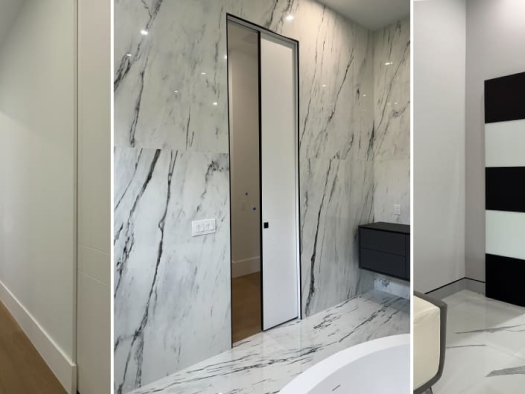
Sliding doors are one of the most effective solutions for open-concept homes. They provide the ability to divide space when needed while remaining unobtrusive when open.
Unlike swing doors, sliding systems do not require additional clearance. This makes them ideal for both large and compact open layouts where efficiency is important.
There are several popular types of sliding doors used in modern interiors:
-
pocket doors that disappear into the wall
-
bypass doors designed for wider openings
-
barn doors that add a distinctive design element
Sliding doors are particularly useful for separating kitchens, home offices, or guest areas while maintaining the overall openness of the space.
Modern interior doors for seamless integration
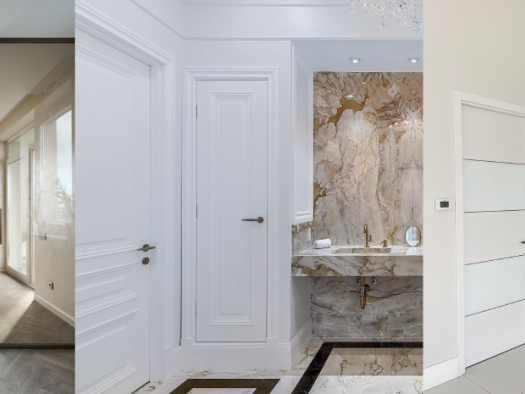
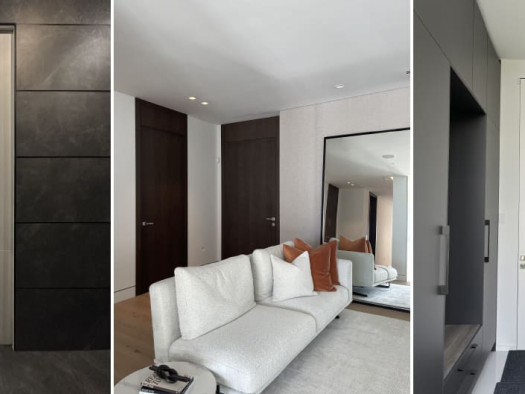
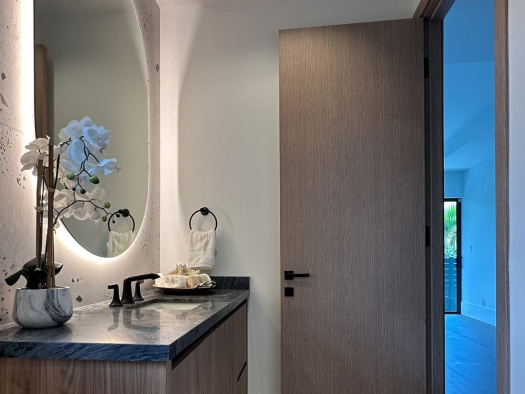
Modern Interior Doors are designed to blend into the surrounding environment rather than stand out. Their clean lines, smooth surfaces, and neutral finishes make them perfect for open-concept interiors.
These doors enhance the sense of space by minimizing visual distractions. Instead of drawing attention, they support the overall design and allow other elements to stand out.
Another advantage is their versatility. Modern doors can be used across different rooms while maintaining a consistent style throughout the home.
A well designed modern door does not divide space it completes it
Frameless doors for invisible transitions
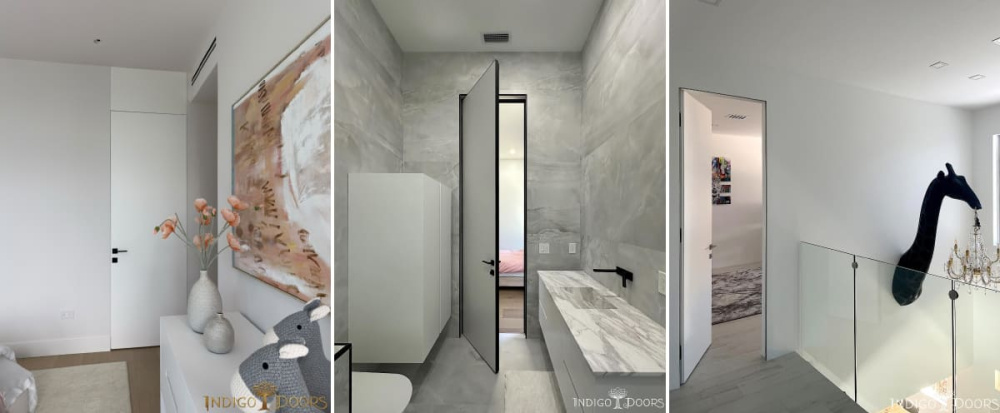
Frameless Doors, also known as Invisible Doors, are becoming increasingly popular in high-end open-concept homes. These doors sit flush with the wall and can be painted to match the surrounding surface.
The result is a nearly invisible transition between spaces. This creates a clean and minimalist look that enhances the architectural quality of the interior.
They are especially effective in homes where continuity and simplicity are priorities. By eliminating visible frames and trims, these doors reduce visual clutter and create a more refined environment.
Space saving door types for efficient layouts
Even in open-concept homes, efficient use of space remains important. Certain door types are specifically designed to maximize usable area while maintaining functionality.
These options are particularly useful in smaller homes, apartments, or areas where space optimization is critical.
Common space-saving solutions include:
-
bi-fold doors for closets and compact zones
-
pocket doors for tight transitional areas
-
bypass doors for wardrobes and storage
By choosing the right type, homeowners can improve both functionality and layout efficiency without sacrificing style.
Statement doors as focal design elements
While many open-concept interiors aim for minimalism, there is still room for bold design choices. Statement doors can serve as focal points that define the character of the space.
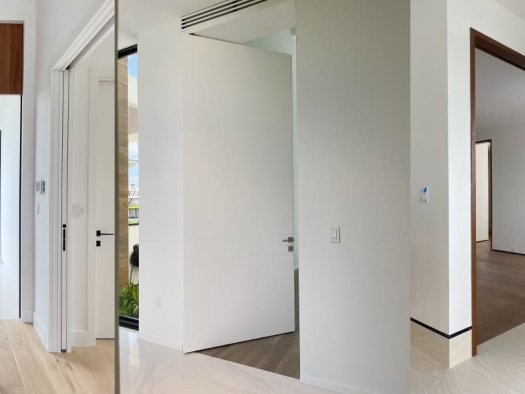
Large doors, unique finishes, or unconventional opening systems can add personality without overwhelming the design. The key is balance—making the door stand out while still fitting into the overall concept.
Popular statement options include:
-
pivot doors for a modern luxury feel
-
double swing doors for wide openings
-
large glass panel doors for enhanced light flow
In open spaces a single well chosen door can define the entire interior style
How to choose the best interior doors for your home
Selecting the right interior doors for an open-concept home depends on several factors. There is no one-size-fits-all solution, but there are clear guidelines that help make the right decision.
First, consider how often you need to separate spaces. If flexibility is important, sliding or pocket doors are usually the best option. For purely aesthetic purposes, frameless or modern flush doors may be more suitable.
Second, think about light and visibility. Doors with glass panels or minimalist designs help maintain brightness and openness.
Finally, ensure that all doors in the home follow a consistent style. This creates a cohesive look and increases the perceived quality of the interior.
Conclusion best interior doors for open concept homes
Open-concept homes require a different approach to interior door selection. Instead of focusing only on separation, doors must enhance flexibility, maintain visual flow, and support modern living.
From sliding systems to frameless designs and modern interior doors, the right choice can transform how a space functions and feels. When selected correctly, interior doors become an integral part of the design rather than an afterthought.
Choosing high-quality, well-designed doors ensures that your open-concept home remains both beautiful and practical for years to come.