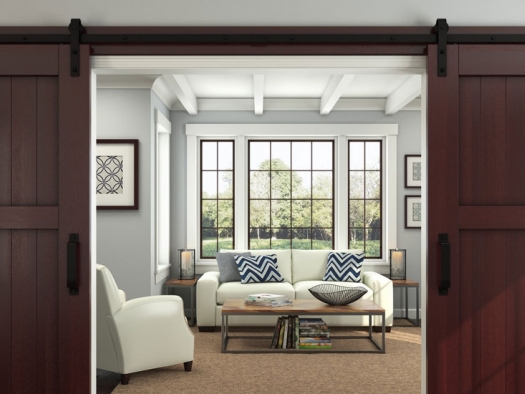

- What Are Pivot Doors and How They Function
- What Defines Traditional Swing Doors
- Aesthetic Impact in Modern Home Design
- Space Efficiency and Clearance Requirements
- Installation Complexity and Structural Considerations
- Durability and Mechanical Performance
- Cost Factors and Budget Planning
- Which Option Is Better for Your Interior Project
Choosing between pivot doors and traditional swing doors is not simply a technical decision — it directly affects spatial flow, visual balance, and architectural identity. In modern American homes, especially in design-forward markets like Florida, interior door systems are increasingly becoming focal elements rather than secondary components.
Both pivot and traditional swing doors serve the same fundamental purpose, yet their mechanics, aesthetics, and performance characteristics differ significantly. Understanding these differences helps homeowners, architects, and builders make informed decisions when selecting high-quality interior doors manufactured in the USA.
At Indigo Doors, we produce premium interior door systems including pivot, swing, double swing (French), pocket, barn, bypass, bi-fold, roto, and Magic configurations — offering flexibility for every layout.
What Are Pivot Doors and How They Function
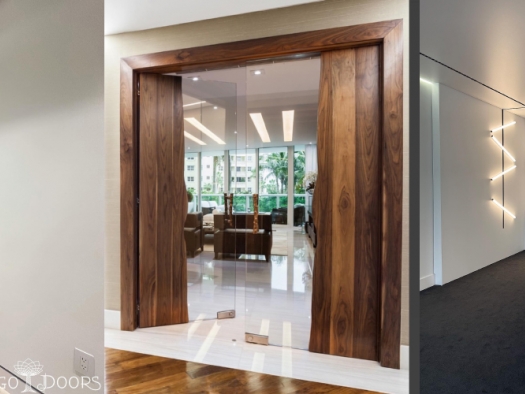
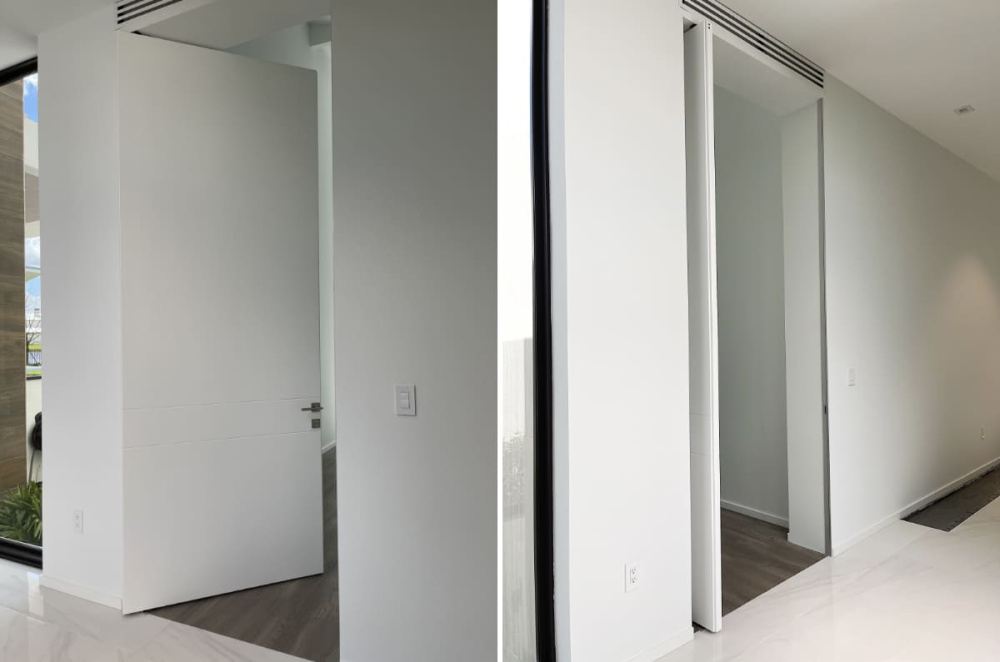
A pivot door rotates on a vertical axis supported by top and bottom pivot hinges rather than side-mounted hinges. Instead of attaching to the door jamb, the door is anchored to the floor and ceiling through a concealed pivot system.
This engineering approach allows for:
-
Larger and heavier door panels
-
Smooth rotational movement
-
Dual-direction opening
-
A bold architectural presence
Pivot interior doors are often used in Modern Interior Doors collections because they align with minimalist design principles. The hardware remains discreet, while the door panel becomes a sculptural feature within the room.
Unlike traditional hinges that concentrate weight along one vertical edge, pivot systems distribute weight vertically. This creates enhanced structural stability for oversized doors.
“A pivot door doesn’t just open a room — it transforms how the room feels when you enter it.”
What Defines Traditional Swing Doors
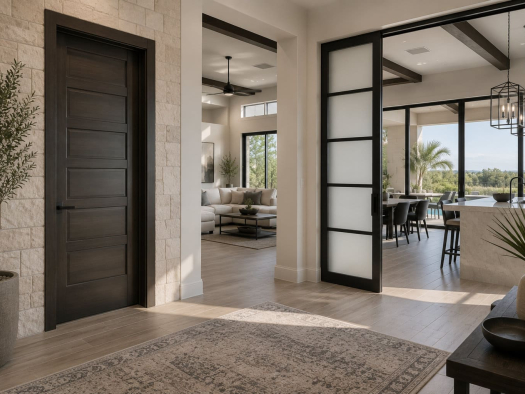
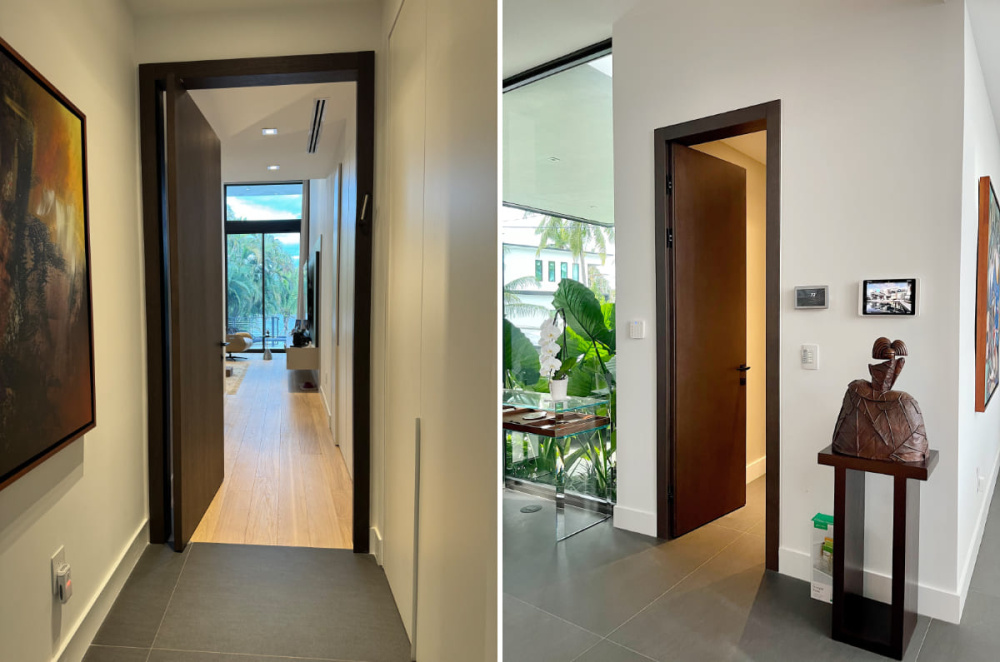
Traditional swing doors operate using side-mounted hinges attached to a door jamb. They open in one direction unless configured as double swing (French) doors.
This system has been standard in American homes for generations. Its reliability and simplicity make it a preferred choice for:
Swing doors provide predictable performance and compatibility with most wall constructions. They are available in modern, classic, and royal panel styles, allowing them to integrate into both contemporary and traditional interiors.
Their familiarity makes them easy to maintain and widely adaptable.
Aesthetic Impact in Modern Home Design
From a design perspective, pivot doors create a stronger architectural statement. They often appear thicker, taller, and more substantial than conventional doors. The absence of visible side hinges enhances visual sophistication.
Pivot doors are particularly effective in:
-
Luxury contemporary homes
-
High-ceiling interiors
-
Open-plan layouts
-
Statement entry transitions
Traditional swing doors, by contrast, emphasize structural clarity. They define boundaries cleanly and work exceptionally well in homes with classic trim, molding, or transitional design elements.
Visually, the difference can be summarized as:
-
Pivot doors feel bold and sculptural
-
Swing doors feel structured and timeless
-
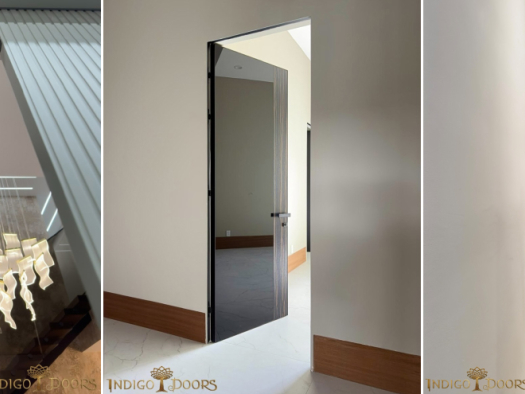
Pivot doors often support flush or frameless aesthetics
-
Swing doors align with framed and panel detailing
Choosing between the two depends largely on the architectural language of the home.
Space Efficiency and Clearance Requirements
Spatial planning is a critical factor when selecting between pivot and swing interior doors.
Pivot doors require floor anchoring and ceiling support, meaning subfloor stability and structural preparation are important considerations. They also require clearance on both sides of the pivot axis.
Traditional swing doors require wall clearance in the direction of opening. In tight hallways or small rooms, this may limit furniture placement.
Consider these spatial differences:
-
Pivot doors rotate partially into the room on both sides
-
Swing doors open fully into one side
-
Pivot systems may allow wider openings
-
Swing doors require less structural modification
In smaller Florida condos or townhomes, space planning can strongly influence which system is more practical.
Installation Complexity and Structural Considerations
Pivot doors require precise alignment. The floor and ceiling pivot points must be perfectly coordinated to ensure smooth operation. Because the weight load transfers vertically, installation precision is critical.
Swing doors rely on traditional jamb systems and side hinges, which are simpler and more familiar to contractors.
Important installation distinctions include:
-
Pivot doors demand structural reinforcement
-
Swing doors integrate easily into standard framed openings
-
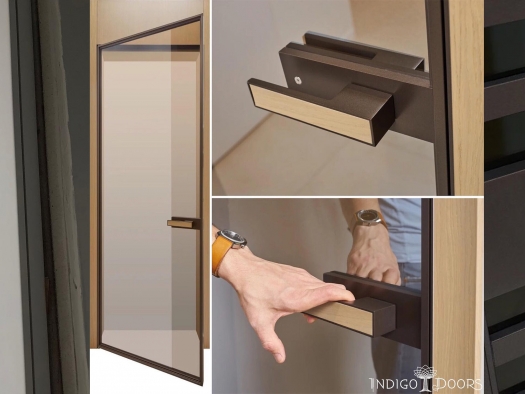
Pivot hardware is concealed within the system
-
Swing hinges remain accessible for maintenance
While Indigo Doors focuses on manufacturing and supplying premium interior doors across the United States, understanding installation requirements helps customers coordinate efficiently with their project teams.
Durability and Mechanical Performance
Pivot systems are engineered for smooth motion and longevity. High-quality pivot hardware can support substantial weight without stressing side frames.
Traditional swing doors, when constructed with premium hinges and solid cores, provide dependable performance for decades.
Performance comparison highlights:
-
Pivot systems distribute weight vertically
-
Swing hinges concentrate weight along one edge
-
Pivot doors reduce hinge sag risk in oversized panels
-
Swing doors offer proven long-term reliability
Both options can be manufactured in durable finishes suitable for Florida’s humidity levels, ensuring long-term structural integrity.
“The longevity of any interior door depends as much on engineering as on aesthetics.”
Cost Factors and Budget Planning
Pivot doors generally involve more specialized hardware and structural coordination. This can influence overall project budgeting, especially for oversized or custom configurations.
Traditional swing doors typically offer more predictable cost structures because their hardware and framing systems are standardized.
When evaluating cost, consider:
-
Door size and thickness
-
Finish selection
-
Hardware complexity
-
Architectural compatibility
Premium interior doors contribute significantly to a home’s resale value. Investing in high-quality manufacturing often yields long-term financial benefits.
Which Option Is Better for Your Interior Project
There is no universal answer. The choice between pivot doors and traditional swing doors depends on design priorities, structural conditions, and visual objectives.
Choose pivot interior doors if you want:
-
A dramatic modern statement
-
Oversized or tall door panels
-
Minimalist architectural lines
-
Dual-direction functionality
Choose traditional swing doors if you prioritize:
-
Architectural compatibility
-
Budget predictability
-
Renovation flexibility
-
Classic or transitional styling
At Indigo Doors, we manufacture and supply Modern Interior Doors, Royal Collection, Frameless Doors Invisible Doors, and Classic Collection doors in pivot and swing configurations, serving customers nationwide from our Florida headquarters.
Selecting the right door system is not only about movement — it is about defining how space transitions, how light flows, and how your home communicates its design identity.